One Dumpling to Rule Them All: The XLB Obsession Taking Over American Food Culture
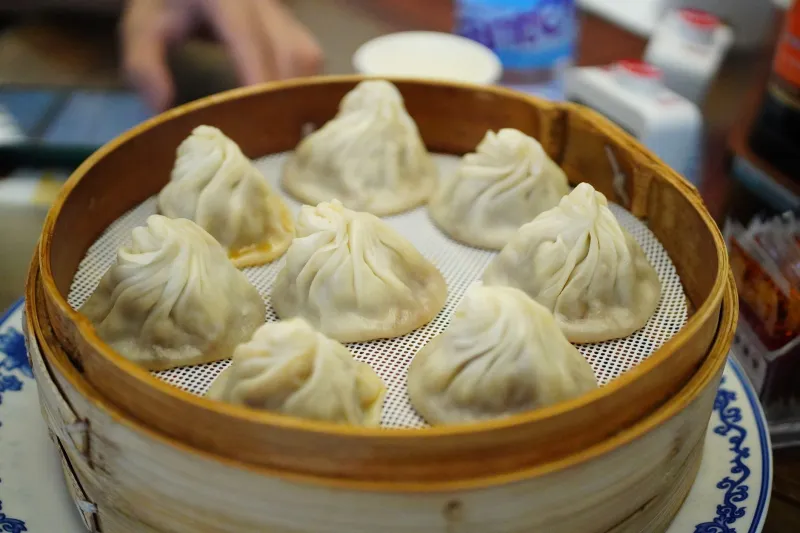
Somewhere between your first cautious nibble and the moment scalding broth runs down your chin, something clicks. The xiaolongbao — XLB to its devotees — stops being just a dumpling and becomes a kind of revelation. It's happened to food writers, line cooks, suburban parents, and college students alike. And increasingly, it's happening all over America.
What started as a Shanghainese breakfast staple, served in bamboo steamers at neighborhood hole-in-the-wall joints, has somehow morphed into one of the most talked-about, argued-over, and obsessed-upon dishes in the American food conversation. The soup dumpling isn't just popular. It's a phenomenon.
From Nanxiang to Nashville: How XLB Crossed the Pacific
The origin story of xiaolongbao traces back to the Nanxiang district of Shanghai, where, legend has it, a restaurateur named Huang Mingxian started making larger, soup-filled buns in the 1870s. Over generations, the bun shrank, the technique refined, and the dish became synonymous with Shanghai itself. When you eat XLB in Shanghai, you're eating history wrapped in a paper-thin skin.
The dish made its American debut quietly, tucked into the menus of Chinese restaurants in places like Flushing, Queens and the San Gabriel Valley outside Los Angeles. For years, it was a regional specialty — something you had to seek out, something your Chinese-American coworker might mention if you were lucky. Then came the restaurant chains, the food media, and the internet.
Din Tai Fung, the Taiwanese chain with Michelin stars and a cult following, opened U.S. locations and essentially introduced mainstream America to the idea that a dumpling could contain a fully formed broth. Lines snaked out the door. Instagram filled up. And suddenly, every food-curious American wanted to know: what is this thing, and where can I get one?
The Holy Trinity: Skin, Filling, and Soup
Here's the thing that makes XLB genuinely difficult and genuinely brilliant — it's three dishes in one. You've got the wrapper, which needs to be thin enough to be delicate but strong enough to hold liquid without tearing. You've got the pork filling, seasoned with ginger, soy, and Shaoxing wine. And then you've got the soup, which is the real magic trick.
That broth isn't injected with a syringe. It starts as a rich aspic — a gelatinized stock made from pork skin and bones — that gets mixed into the filling while cold. When the dumplings hit the steam, the gel melts into pure liquid gold. Getting that ratio right is the obsession of every serious XLB maker. Too much gelatin and the soup overwhelms the filling. Too little and you've just made a regular dumpling, which is fine, but it's not the point.
Food enthusiasts in American cities have started treating the soup-to-skin ratio the way wine nerds talk about tannins. There are Reddit threads dissecting the wrapper thickness at specific restaurants. Yelp reviews that read like engineering reports. This is what happens when a technically demanding dish meets an audience that loves to geek out.
The Restaurant Wars Are Real
In cities like New York, San Francisco, Seattle, and Houston, the XLB scene has quietly become competitive in a way that few other dishes have managed. Established Shanghainese restaurants find themselves measured against newer spots that have made the dumpling their entire identity. Chefs who trained in Shanghai bring techniques that purists insist can't be replicated by anyone who hasn't spent years folding pleats by hand — 18 pleats being the traditional benchmark, because apparently even the folds are a status symbol.
And the variations are multiplying. Crab and pork XLB, which is the prestige version in Shanghai, has become a marker of a restaurant's ambition. Black truffle XLB shows up on tasting menus. There are vegan interpretations using mushroom aspic that have surprised even skeptics. The dish is evolving in real time, shaped by both Shanghai tradition and American appetite.
Not everyone is happy about this. Purists — and there are many — argue that the Americanized versions prioritize novelty over craft. That a truffle dumpling misses the point entirely. That the soul of XLB is in its restraint, its simplicity, its connection to a specific time and place in Shanghai's culinary history. It's a fair argument. It's also the kind of argument that only happens when a dish truly matters.
The Home Cook Frontier
Perhaps the most telling sign of XLB's cultural arrival is what's happening in American home kitchens. Cooking the dish from scratch is genuinely hard — the dough requires practice, the pleating is a skill that takes months to develop, and timing the steam correctly is its own challenge. None of that has stopped people from trying.
YouTube tutorials from Shanghai home cooks have racked up millions of views. Specialty grocers in major cities now stock the right flour blends and pre-made aspic. Cooking classes built entirely around XLB technique have waiting lists. There's something deeply satisfying about the fact that this dish — one that requires actual skill — has become a home cooking goal rather than just a restaurant experience.
At Shanghai Shiok, we think that's exactly the right instinct. The best way to understand a cuisine is to try making it yourself, to feel the dough, to mess up the pleating a few times, to taste the aspic before it goes in and understand what it becomes. XLB teaches you something about patience, about technique, about the difference between food that's merely assembled and food that's actually constructed.
Why Shanghai's Dumpling Isn't Going Anywhere
The XLB moment in America doesn't feel like a trend. Trends come and go — remember cronuts? — but this dumpling has shown staying power because it delivers on its promise every single time. Bite through the skin, sip the broth, eat the filling. It's a complete sensory experience in the palm of your hand.
More than that, it's a door. For millions of Americans, xiaolongbao has been the first step into a much larger world of Shanghai cuisine — a world of red-braised pork belly, scallion noodles, fermented tofu, and cold sesame dishes that are just as worthy of obsession. The dumpling is the gateway, and once you've gone through it, there's no going back.
So go ahead. Argue about the pleats. Debate the broth. Wait in line if you have to. The XLB wars are worth fighting.