Forget Brunch: Shanghai's Morning Street Food Is the Breakfast Upgrade America Didn't Know It Needed
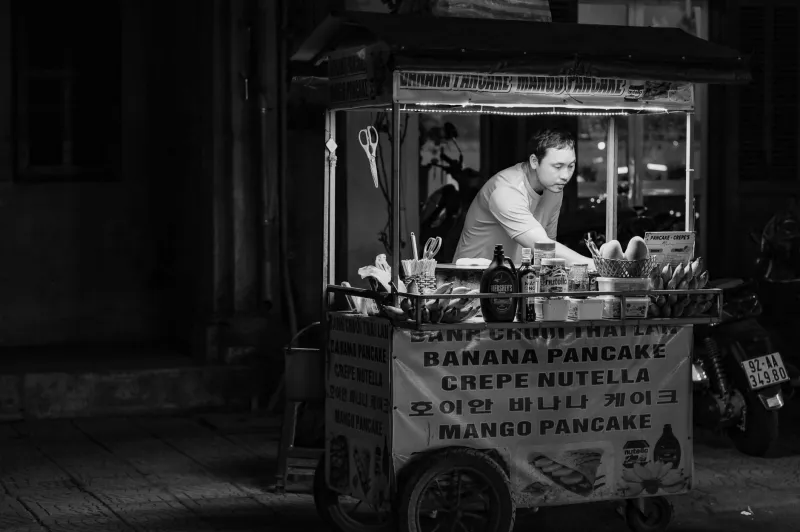
Somewhere in Shanghai, before the sun is fully up, a line has already formed. It stretches past a cart where an older woman is folding scallion pancakes with the kind of practiced, unconscious speed that comes from decades of repetition. The pancakes hit a flat iron griddle, sizzle, get folded, sizzle again. People eat them standing up, wrapped in paper, walking to the subway. Nobody's sitting down. Nobody's checking a menu.
This is breakfast in Shanghai. And once you've experienced it — or even just heard about it — scrambled eggs on toast starts to feel like a missed opportunity.
A City That Takes Its Mornings Seriously
Shanghai has one of the most distinct breakfast cultures in the world. Unlike American mornings, which tend toward the portable and the practical (granola bars, drive-through coffee, yogurt eaten at a desk), the Shanghainese approach to the first meal is almost ceremonial. It's community-oriented, vendor-specific, and deeply tied to neighborhood identity.
The city's zǎocān — morning meal — tradition stretches back centuries, shaped by the rhythms of the Yangtze Delta's working class. Dock workers, merchants, and factory laborers needed food that was fast, filling, and cheap. What emerged was an extraordinary canon of dishes that somehow managed to be all three while also being, frankly, delicious enough to build a whole food culture around.
Today, those same dishes — xiaolongbao, scallion pancakes, youtiao, jianbing — are showing up in American cities with increasing frequency. And not just in Chinatown enclaves. They're appearing on brunch menus in Brooklyn, food halls in Austin, and home kitchens in suburban Ohio. The question isn't whether Shanghai breakfast is having a moment in the US. It's why it took this long.
Xiaolongbao: The One That Started It All
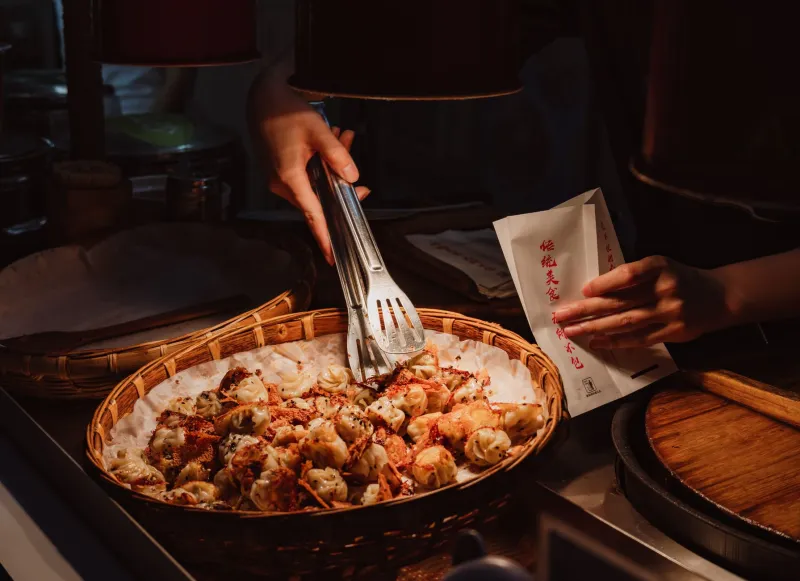
If there's a single Shanghai dish that American diners know, it's xiaolongbao — those delicate, soup-filled dumplings that have become something of a cultural shorthand for "legit Chinese food." The name translates roughly to "little basket buns," and they're made by encasing a pork (or pork-and-crab) filling along with a small cube of gelatinized broth inside a thin, hand-folded wrapper. When steamed, the gelatin melts into hot soup. The result is a dumpling that bites back.
Eating a xiaolongbao correctly is a minor ritual: place it gently on a spoon, bite a small hole in the side, let the soup cool for a moment, then drink it before eating the rest. Skipping any of these steps results in either a burned mouth or a shirt covered in pork broth. Neither is ideal.
Originally a breakfast staple served at Shanghai's xiǎochī (small eats) shops, XLB — as they've been abbreviated by American fans — have become a full-time obsession for a certain kind of food-forward diner. Chains like Din Tai Fung have introduced them to mainstream audiences across the US, and a growing number of regional restaurants are making their own versions from scratch.
For home cooks, making xiaolongbao is ambitious but achievable. The keys are a thin, slightly elastic dough (all-purpose flour, boiling water, a touch of cold water) and a well-seasoned filling with enough pork gelatin to create that iconic soup. It takes practice, but the first time you nail one, it's a genuine moment.
Scallion Pancakes: The Underdog Hero
Cōng yóu bǐng — scallion pancakes — don't get the same press as xiaolongbao, but among people who actually know Shanghai breakfast, they're the real favorite. They're flaky, chewy, aggressively savory, and made from a simple laminated dough that requires no yeast, no fermentation, and no special equipment.
The technique involves rolling dough flat, brushing it with sesame oil and a heavy hand of chopped scallions, then rolling it into a log and coiling it before flattening again. This creates the characteristic layers that shatter slightly when you bite through them. They're pan-fried in a shallow pool of oil until deeply golden and spotted brown.
In Shanghai, scallion pancakes are typically eaten plain, sometimes dipped in a little black vinegar and soy sauce. In the US, they've been adapted in every direction — served with hoisin and duck, used as a wrap, cut into wedges as an appetizer. All of these are fine. But eating one straight off the pan, slightly too hot, with nothing but a sprinkle of salt, is the move.
"Scallion pancakes are one of the first things I teach people," says home cooking instructor and Shanghai native Mei Zhu, who runs weekend cooking workshops in the San Francisco Bay Area. "They look complicated but they're really just about the technique. Once you understand the layering, you can make them in 30 minutes. And then you'll never stop making them."
Youtiao: China's Answer to the Doughnut
Youtiao are long, golden, slightly hollow fried dough sticks — crispy on the outside, airy and chewy within. In Shanghai, they're typically eaten alongside a bowl of warm soy milk (dòu jiāng), either dunked directly or torn into pieces and dropped in. The combination of the savory, lightly salted dough with the subtly sweet, beany warmth of fresh soy milk is one of those flavor pairings that makes you wonder why it isn't universal.
In the US, youtiao have started appearing in Asian bakeries and dim sum spots, though they're still not as widely known as they deserve to be. Part of the issue is freshness — youtiao are at their absolute best within minutes of coming out of the fryer, and the ones sitting in a display case for two hours are a pale imitation.
For home cooks willing to deep-fry (and it's worth it, at least once), youtiao require a leavened dough made with baking powder and a small amount of baking soda, rested overnight, then stretched and fried in pairs that puff and fuse together in the oil. Serve them immediately with warm soy milk sweetened with just a little sugar.
Jianbing: The Shanghai Street Crepe That's Quietly Going Viral
Of all Shanghai's breakfast exports, jianbing may be the one with the most obvious crossover appeal for American diners. It's essentially a savory crepe — a thin, eggy wrapper made on a round griddle, spread with hoisin and chili sauce, topped with a sheet of crispy fried dough, fresh cilantro, and pickled vegetables, then folded into a neat package.
It's fast, it's portable, it's packed with contrasting textures, and it hits every flavor note at once: sweet, savory, spicy, crunchy, soft. If you designed a breakfast food from scratch to appeal to American palates, you'd probably end up somewhere close to jianbing.
Several US cities have seen jianbing-focused food trucks and stalls emerge over the past decade, and the dish has racked up serious social media traction — partly because it looks spectacular being made and partly because the finished product photographs beautifully. Mei Zhu calls it "the gateway breakfast" for people who are curious about Shanghai food but don't know where to start.
Bringing Shanghai Mornings Home
The beautiful thing about Shanghai's breakfast culture is that none of these dishes require a special trip or a restaurant reservation. They were always designed to be fast, accessible, and made in quantity. That spirit translates directly to the American home kitchen.
Start with scallion pancakes on a Saturday morning — they're the most forgiving and the most immediately rewarding. Work up to jianbing for a weekend project. Save xiaolongbao for when you're ready to commit a full afternoon and impress everyone you know.
And if you can find a good Asian grocery store nearby, grab some fresh soy milk and a pack of frozen youtiao to heat in the oven. Eat them together, standing at the counter, before the rest of the household is awake.
That's the Shanghai way. And once you've had it, your old breakfast routine is going to feel pretty underwhelming.
Shiok, right?