The Secret Weapon in Shanghai's Kitchen: How Red Oil Is Changing the Way Americans Cook
Walk into any serious Shanghai home kitchen and you'll find a jar of it somewhere — dark, glossy, and impossibly fragrant. Red oil, or hóng yóu, isn't quite a sauce, not exactly a spice paste, and definitely not your average chili condiment. It's something more elemental than that. It's a technique, a tradition, and increasingly, a movement that's working its way from Shanghainese dining rooms straight into American pantries.
If you've been sleeping on red oil, consider this your wake-up call.
What Actually Makes Red Oil Different
Let's clear something up right away: Shanghai red oil is not the same as Sichuan chili oil, and it's definitely not the jarred stuff from the grocery store ethnic foods aisle. While Sichuan-style chili oil leans hard into numbing heat and bold spice, Shanghai's version is more nuanced — slower to hit, deeper in flavor, and built around a layering philosophy that prioritizes complexity over firepower.
The base is typically a neutral oil (soybean or vegetable) heated to a precise temperature — usually around 300°F — then poured in stages over a mixture of dried chilies, star anise, cinnamon, and sometimes fermented black beans. That staged pouring is everything. The first pour blooms the dried aromatics at high heat, releasing fat-soluble compounds. A second, cooler pour draws out water-soluble flavor molecules. The result is an oil that carries waves of flavor rather than a single blunt note.
"The technique is really about respecting the ingredient's full potential," says Chef Lin Wei, a Shanghai-born culinary consultant now based in New York who has spent years introducing Shanghainese cooking to American audiences. "Most people only get one dimension from their chili oil. Red oil, done properly, gives you five or six."
That multi-dimensional quality comes down to chemistry. Capsaicin — the compound responsible for heat — is fat-soluble, meaning it infuses beautifully into oil. But the real magic happens when you layer in glutamate-rich ingredients like dried shrimp, fermented pastes, or even a small amount of soy. These introduce free glutamates that bind with other amino acids during the heating process, creating what food scientists call a umami cascade — a flavor reaction that keeps developing on your palate long after the first bite.
A Technique Rooted in Shanghai's History
Shanghai has always been a city of synthesis. Sitting at the mouth of the Yangtze River Delta, it absorbed culinary influences from across China while developing its own distinct identity — one that prized refinement, sweetness, and depth over raw intensity. The city's benbang (local) cuisine became known for its rich braises, subtle sweetness, and a masterful use of soy and sugar.
Red oil emerged as a bridge between Shanghai's gentler flavor profile and the spicier traditions creeping in from Hunan and Sichuan. Rather than adopting those regional styles wholesale, Shanghai cooks adapted them — softening the heat, adding sweetness, and building in the kind of layered complexity that defines the city's cooking identity.
By the early 20th century, red oil had become a cornerstone technique in Shanghai's street food and home cooking alike. It showed up in cold noodle dressings, braised pork belly, wontons, and stir-fried vegetables. It was, and still is, the kind of ingredient that makes everything it touches taste more like itself — only better.
Hongshao Rou: The Dish That Proves the Point
If you want to understand what red oil does at its absolute best, make hongshao rou — Shanghai-style red-braised pork belly. This is the dish that food writers reach for when they try to explain Shanghainese cooking to outsiders, and for good reason.
The pork — ideally a thick slab of skin-on belly — gets seared first to render some fat and develop color. Then it goes into a braise built from Shaoxing wine, dark soy sauce, rock sugar, and, crucially, a spoonful or two of red oil. The oil doesn't make the dish spicy. Instead, it introduces a slow, warm bass note that cuts through the richness of the pork and ties the sweet-savory balance together.
Here's a simplified version you can try at home:
Basic Hongshao Rou (serves 4)
- 2 lbs skin-on pork belly, cut into 2-inch chunks
- 3 tbsp Shaoxing wine
- 3 tbsp dark soy sauce
- 1 tbsp light soy sauce
- 2 tbsp rock sugar (or brown sugar)
- 1–2 tbsp Shanghai-style red oil
- 2 cups water
- 2 scallions, tied in a knot
- 3 slices fresh ginger
Blanch the pork in boiling water for 5 minutes, then drain and pat dry. Sear in a dry wok over high heat until golden on all sides. Add the wine and let it sizzle, then add everything else. Bring to a boil, reduce to a low simmer, cover, and braise for 90 minutes. Uncover and cook another 20–30 minutes until the sauce is thick and lacquered. Serve over steamed rice.
The red oil in that recipe is doing quiet, essential work. Don't skip it.
Chili Oil Noodles: The Gateway Dish
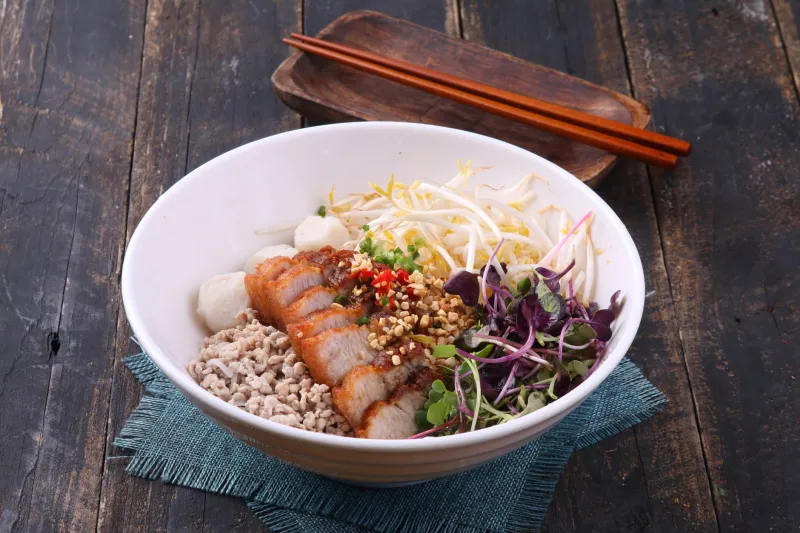
If hongshao rou is the deep cut, Shanghai-style chili oil noodles are the entry point — and they've become something of a phenomenon in American food culture over the past few years. Food TikTok has had a field day with them. Serious home cooks are making their own red oil from scratch. Even mainstream food publications are running tutorials.
The appeal is obvious: they're fast, cheap, deeply satisfying, and endlessly customizable. The base is simple — cooked noodles (thin wheat noodles work best, but spaghetti in a pinch is genuinely fine) tossed with red oil, a splash of black vinegar, soy sauce, sesame paste, and a hit of sugar. Toppings can go anywhere from soft-boiled eggs and cucumber ribbons to crispy shallots and fresh cilantro.
What makes the Shanghai version distinct from, say, a Dan Dan noodle is that restrained heat and the emphasis on sweet-sour balance. It should taste bright and complex, not just hot.
Making Your Own Red Oil
You can buy decent red oil at most Asian grocery stores, and a few specialty brands have made it to mainstream retailers. But making your own is a genuinely rewarding project, and once you do it, you'll understand the technique on a level that changes how you cook.
Start with 1 cup of a neutral oil. In a heatproof bowl, combine 3 tbsp Korean gochugaru (it gives a beautiful color without overwhelming heat), 1 tbsp Sichuan chili flakes, 1 tsp five-spice powder, 1 tsp sesame seeds, and a pinch of salt. Heat your oil to about 375°F. Pour roughly one-third over the spice mixture — it will sizzle dramatically. Let it settle, then pour another third at a slightly lower temperature. Wait again, then add the final third. Stir in 1 tsp dark soy sauce and let cool completely before storing.
Keep it in a sealed jar in the refrigerator. It gets better after a few days.
Why American Cooks Are Ready for This
The timing makes sense. American palates have been moving steadily toward more complex, fermented, and umami-forward flavors for years. The rise of Korean food, the mainstream embrace of miso and fish sauce, the gochujang moment — all of it has been quietly preparing home cooks for exactly what Shanghai red oil offers.
It rewards curiosity. It punishes shortcuts. And it delivers the kind of deep, resonant flavor that makes people lean over their bowl and wonder what, exactly, just happened to them.
That's the Shanghai way. And it's shiok as hell.