Chasing the Dragon: The Science and Soul of Wok Hei, Shanghai's Most Elusive Flavor
You know the feeling. You order a plate of dry-fried green beans or a simple egg fried rice at a great Chinese restaurant, and there's something in that first bite—a smoky, almost charred whisper that lingers on your tongue long after you've put your chopsticks down. It's not just heat. It's not just soy sauce. It's wok hei, and it's one of the most talked-about, least-understood flavor phenomena in all of Chinese cooking.
The term translates loosely to "breath of the wok," and if you've ever tried to chase it in your own kitchen, you already know the frustration. The stir-fry comes out fine—maybe even great—but it doesn't have that. The restaurants have it. Your takeout container has a ghost of it. Your home kitchen? Usually, not so much.
So what actually is wok hei, and why is it so hard to replicate? We went deep on the science, talked to cooks who've spent careers mastering it, and came back with a practical guide for anyone cooking on an American stovetop.
What Wok Hei Actually Is (Hint: It's Not Just Smoke)
Here's where a lot of home cooks go wrong from the jump—they assume wok hei is just about smoke. Crank the heat, get some char, done, right? Not quite.
The real story is more interesting. Wok hei is the result of several chemical reactions happening simultaneously at extremely high temperatures. The Maillard reaction—the same browning process that gives a good sear on a steak its crust—is a big part of it. But there's also partial combustion of oils and food particles, rapid evaporation of moisture, and a phenomenon called pyrolysis, where organic compounds in the food break down under intense heat to create new aromatic molecules.
Researchers at the University of California, Berkeley actually studied wok hei back in 2020 and found that the characteristic aroma comes largely from compounds called pyrazines and furans—molecules that form when amino acids and sugars react under extreme heat. These are the same compounds responsible for the smell of coffee being roasted or bread coming out of the oven. Wok hei, at its core, is a flavor of transformation.
Why Restaurant Woks Are Playing a Different Game
Here's the uncomfortable truth that every serious home cook eventually has to reckon with: a commercial wok burner in a Shanghai kitchen or a Cantonese restaurant in Flushing, Queens, outputs somewhere between 100,000 and 200,000 BTUs of heat. Your home gas range? Probably 10,000 to 18,000 BTUs on its strongest burner. Even the fancy "pro-style" ranges that show up in American home kitchen renovations max out around 22,000 BTUs.
That gap isn't just a number—it's the difference between food that sears instantly on contact and food that slowly steams in its own moisture. When you overcrowd a wok on a home burner, the temperature drops, liquid pools, and instead of a fast, fiery stir-fry, you're essentially braising. Good food, potentially. Wok hei? Gone.
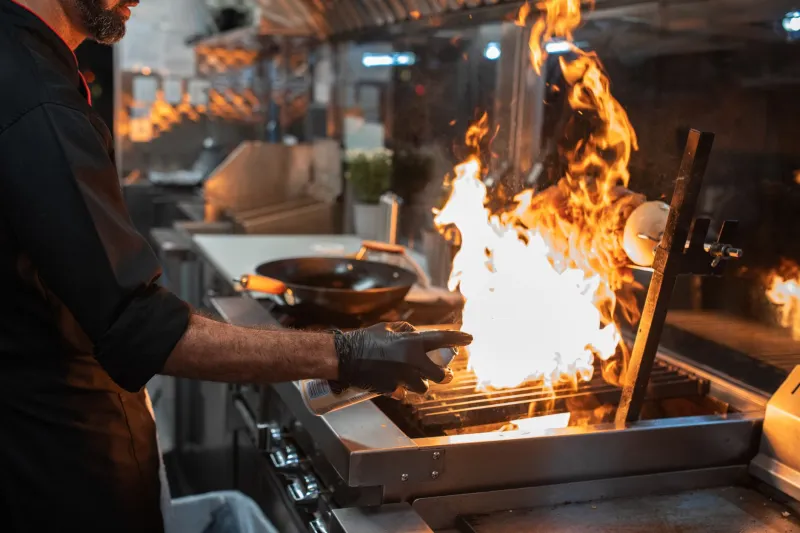
Chef Lin Wei, who grew up cooking in her family's Shanghai kitchen before moving to Chicago and opening a small Shanghainese pop-up, puts it bluntly: "The fire in a restaurant kitchen is alive. It comes up around the sides of the wok. The whole pan is hot, not just the bottom. When I first cooked on an American stove, I thought something was broken."
She's not alone in that experience. Almost every Chinese home cook who's made the transition to American kitchens describes the same shock—the domesticated, safety-conscious flames of a Western range feel almost polite by comparison.
Debunking the Myths
Before we get to what actually works, let's clear out some of the bad advice that floats around on cooking forums and YouTube comments.
Myth #1: You need a carbon steel wok. Carbon steel is great—it heats fast and develops a nonstick seasoning over time—but it's not magic. A well-seasoned carbon steel wok on a weak burner will still produce steamed vegetables. The pan matters less than the heat source.
Myth #2: More oil equals more wok hei. Nope. Excess oil just coats everything and suppresses the Maillard reaction. You want enough oil to prevent sticking and encourage browning, not a deep-fry situation.
Myth #3: Wok hei is about the charred bits. Char and wok hei are neighbors, not twins. A little char can contribute to the flavor, but burnt food is just burnt food. Wok hei is about the transformation of ingredients at the edge of burning—not past it.
Getting Close at Home: Practical Techniques That Actually Work
Okay, here's the good news. While true wok hei—the kind you get at a great restaurant—may be out of reach for most home setups, you can get surprisingly close with the right approach. Chef Lin and several other cooks we spoke with offered their best home-kitchen strategies.
Go outside with a propane burner. This is the nuclear option, and honestly, the most effective one. A standalone propane burner from a hardware or Asian grocery store (look for models marketed for crawfish boils or turkey frying) can output 60,000+ BTUs. Set it up on your patio or driveway, and suddenly you're cooking with real fire. It's not practical for a Tuesday night, but for a dinner party or a weekend project, it's transformative.
Cook in tiny batches. If you're using a home range, this is the single most important habit to develop. Two servings, maximum, per batch. The goal is to keep the wok temperature high enough that ingredients sear rather than steam. Cook in waves and combine at the end.
Preheat longer than you think. Put your wok on the highest burner and walk away for three minutes. Seriously. Most home cooks don't preheat long enough. The wok should be smoking before the oil goes in.
Use the right oil. High smoke-point oils like avocado, peanut, or refined coconut oil can handle the heat without breaking down and turning bitter. Skip extra-virgin olive oil entirely.
Dry your ingredients completely. Moisture is the enemy of wok hei. Pat proteins dry, let vegetables air out on a paper towel after washing, and if you're using a marinade, drain it thoroughly before the food hits the pan.
Finish with a flash of high heat. Chef Lin's personal trick: after the dish is nearly done, push everything to one side, tilt the wok so the empty side is directly over the flame, and let it get scorching for about ten seconds before tossing everything back together. "It's not the same as a restaurant," she admits, "but it adds something."
The Bigger Picture
At Shanghai Shiok, we believe that understanding why something works is as important as knowing how to do it. Wok hei isn't a seasoning you can buy or a technique you can fake—it's the result of real heat, fast hands, and a little bit of fire doing what fire does best.
The gap between a commercial kitchen and your apartment will always exist. But the gap between a steamed, sad stir-fry and something that genuinely sings? That's closeable. It just takes understanding what you're actually chasing—and being willing to preheat your wok for a lot longer than feels reasonable.
Now go find your hottest burner and get to work.