Less Sugar, More Soul: What Shanghai's Dessert Tradition Can Teach American Sweet Tooths
Let's be honest about American dessert culture for a second. It is maximalist. It is proud of itself. It arrives at the table in a ramekin that's still bubbling, or stacked four layers high, or drizzled with something that has been torched tableside for drama. Sweetness, in the American tradition, is a statement.
Shanghai's dessert philosophy is quieter. It doesn't announce itself. It asks you to slow down, pay attention, and recalibrate what you think a sweet ending to a meal is supposed to feel like. And increasingly, American food lovers — tired of sugar overload and curious about what they've been missing — are listening.
A Different Definition of Sweet
The first thing to understand about traditional Chinese sweets, and Shanghai's in particular, is that sweetness is not the goal. It's one note in a chord. The real objectives are texture, warmth, and what Chinese culinary tradition calls a kind of nourishing quality — the idea that a dessert should leave you feeling good in a way that goes beyond a sugar rush.
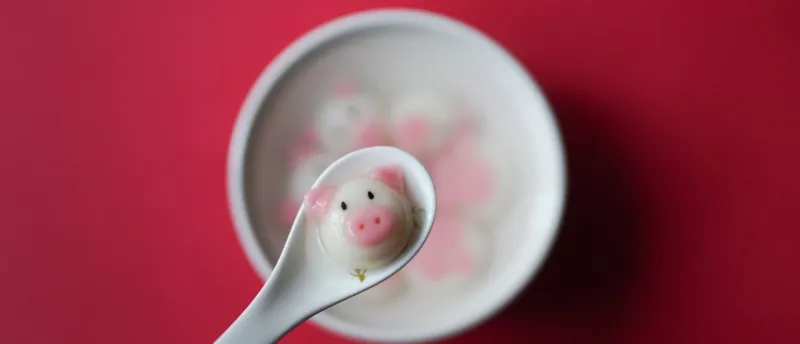
Take tangyuan, the glutinous rice balls that appear at festivals and family dinners across Shanghai and the wider Yangtze Delta region. They're served in a warm broth — sometimes clear and gently sweet, sometimes made with fermented rice wine — and filled with black sesame paste or red bean. The sweetness is present but measured. What you notice first is the texture of the rice skin, which is soft and slightly chewy in a way that has no real Western equivalent. Then the filling blooms in your mouth, rich and nutty rather than sugary.
Or consider nian gao, the sticky rice cake that shows up around Lunar New Year. Pan-fried in a thin egg wash until the outside is golden and slightly crisp while the interior stays dense and chewy — it's a dessert that's more about contrast and satisfaction than sweetness per se. Americans who try it often say it reminds them of something, but they can't quite say what. That's because nothing in the Western dessert canon actually works this way.
The Texture Obsession That Changes Everything
If you want to understand Shanghai sweets, you need to make peace with texture as a primary flavor experience. This is the biggest conceptual shift for American home cooks and diners, and it's worth spending some time with.
Glutinous rice — also called sweet rice or sticky rice, though it contains no actual sugar — is the backbone of many of Shanghai's most beloved desserts. When cooked, it develops a dense, elastic quality that Western pastry traditions simply don't use. Sesame balls (jian dui) are made from glutinous rice flour, filled with lotus paste or red bean, coated in sesame seeds, and deep-fried until they puff into golden spheres with a shatteringly crisp exterior and a chewy, yielding interior. The contrast is the whole point.
For American palates trained on the smooth, creamy textures of panna cotta or the flakiness of a good pie crust, this can take some adjustment. But here's the thing: once you get it, you really get it. The chewiness of glutinous rice desserts is addictive in a way that's hard to explain until you've experienced it. It's why mochi has already found a devoted following in the U.S. — and mochi is just the beginning.
Chefs Bridging the Gap
Across American cities, a generation of Chinese-American pastry chefs and dessert shop owners are doing the work of translation — not watering down Shanghai's sweet traditions, but presenting them in contexts that make them accessible without making them apologetic.
In cities like San Francisco, New York, and Los Angeles, you'll find dessert shops built around tong sui — Cantonese-style sweet soups that have close cousins in Shanghai's own warm dessert tradition. Chefs are incorporating douhua (silken tofu pudding served with ginger syrup) into brunch menus. Sesame paste desserts are showing up at pop-ups and farmers markets. The conversation is happening, and it's gaining momentum.
What these chefs share is a commitment to letting the ingredients speak. Red bean paste, made properly, has a natural sweetness and an earthy depth that doesn't need to be amplified with extra sugar. Black sesame has a roasted, almost bitter edge that plays beautifully against mild sweetness. These are complex flavors, and chefs who understand them aren't trying to make them taste like Western desserts. They're asking diners to meet them somewhere new.
Try It at Home: Where to Start
The good news for curious home cooks is that several classic Shanghai-style sweets are genuinely approachable, even for beginners. Here's a practical starting point.
Ginger Syrup Douhua is probably the easiest entry point. Silken tofu — the softest variety you can find — is gently warmed and served with a syrup made from fresh ginger simmered with rock sugar and water. The result is delicate, warming, and subtly sweet. It takes about 20 minutes and requires almost no technique. Taste it and you'll immediately understand why Shanghai grandmothers have been serving it for generations.
Black Sesame Tang Yuan is a step up in skill but deeply rewarding. Make the filling by blending toasted black sesame seeds with a small amount of sugar and melted lard or coconut oil until it forms a paste. Refrigerate until firm, then portion into small balls. Wrap each one in glutinous rice dough (glutinous rice flour mixed with just enough water to form a soft dough), pinch closed, and boil until they float. Serve in warm water sweetened lightly with rock sugar. The key is not oversweetening the broth — the sesame filling carries the flavor.
Pan-Fried Nian Gao requires store-bought nian gao (available at any Asian grocery store), sliced into half-inch pieces, dipped in beaten egg, and pan-fried in a neutral oil until golden on both sides. Eat immediately while the outside is still crisp. This one tends to convert skeptics fast.
Why Now Is the Right Moment
American food culture is in a moment of genuine curiosity about alternatives to sugar overload. The wellness conversation, the growing interest in fermented and functional foods, and a general fatigue with desserts that feel like a dare rather than a pleasure — all of it has created an opening.
Shanghai's dessert tradition fits that opening almost perfectly. It offers sweetness without excess, complexity without pretension, and a connection to ingredients — sesame, red bean, glutinous rice, ginger — that feel substantial and real. These aren't empty calories dressed up in buttercream. They're sweets with a history and a purpose.
At Shanghai Shiok, we believe the best food stories are the ones that ask you to think differently about something familiar. Dessert, it turns out, is one of the best places to start. So skip the lava cake this weekend. Make yourself a bowl of warm douhua with ginger syrup. See what happens when sweetness gets out of its own way.