Why Your Slow Cooker Is the Enemy of a Great Braise
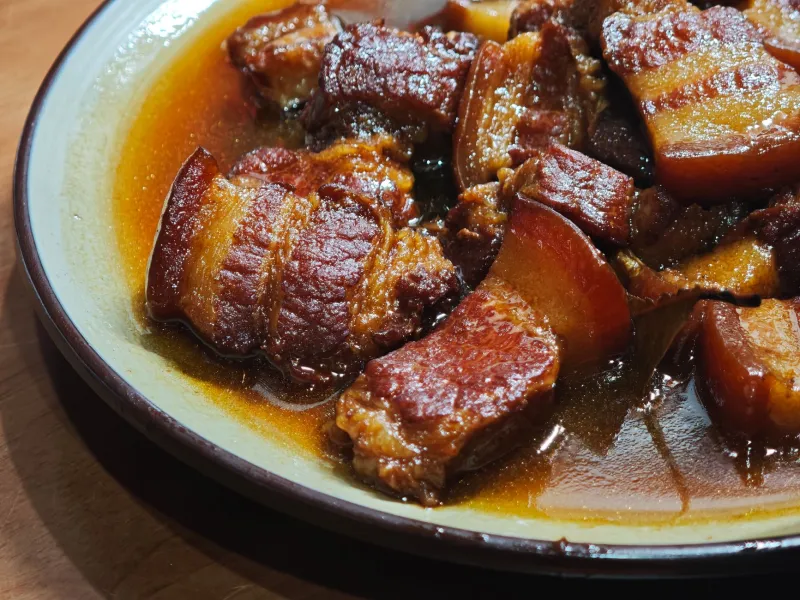
There's a moment in a proper Shanghai braise when the kitchen smells like it's been cooking for a hundred years. The soy sauce has caramelized into something darker and more complex than it started. The fat from the pork belly has rendered slowly and then re-absorbed into the meat. The sauce has thickened to a glossy, almost lacquer-like finish that clings to everything it touches. It's one of the great sensory experiences in Chinese home cooking.
Now imagine none of that happening. Imagine instead a pot of liquid-logged meat sitting in a puddle of diluted braising liquid that never quite got hot enough to reduce, never developed a real crust, and never achieved that depth of color that makes hong shao rou — red-braised pork belly — look like it belongs on a restaurant menu. That's what you get when you hand the job to a slow cooker.
This isn't a knock on convenience. Busy weeknights are real. But if you've ever tried to make a Shanghai-style braise in a Crockpot and wondered why it tasted flat, watery, or weirdly sweet, the appliance is the answer.
What Shanghai Braising Is Actually Doing
To understand why slow cookers fall short, you have to understand what Shanghai braising is trying to accomplish in the first place.
The cornerstone technique is called hong shao, or red braising. It's the method behind some of the most iconic dishes in Shanghai cuisine — pork belly, fish, tofu, even eggs. The process involves searing the protein first, then building a braising liquid from soy sauce (both light and dark), Shaoxing rice wine, sugar, aromatics like ginger and scallion, and sometimes a touch of five-spice. The food cooks in this liquid at a controlled simmer, and the liquid gradually reduces around it, concentrating and intensifying until it becomes a sauce rather than a broth.
Here's the key word: reduces. A slow cooker doesn't reduce anything. It traps moisture and holds it. The lid seals in every drop of evaporation, which means your braising liquid never concentrates, the sugars never caramelize, and the sauce never tightens into that glossy finish. You end up with braised meat sitting in what is essentially a diluted, steamed version of the sauce you started with.
Shanghai cooks know that a braise is a living process. You check it. You adjust the heat. You taste the liquid halfway through and decide whether it needs more sugar, more soy, more time with the lid off. A slow cooker removes every single one of those decision points.
The Temperature Problem
Slow cookers typically operate between 170°F on low and around 280°F on high. That sounds like a wide range, but for braising, it's actually a problem on both ends.
At the low setting, you're cooking below a true simmer. The collagen in pork belly or beef short ribs needs consistent heat to break down properly into gelatin, which is what gives a great braise its body and richness. Too low, and you get meat that's technically soft but has a stringy, almost waterlogged texture rather than the silky, yielding quality that makes Shanghai-style pork belly so extraordinary.
At the high setting, you're often cooking too aggressively and without the kind of control that lets you back off the heat when the liquid starts to reduce too quickly. In a stovetop braise, you can see what's happening and respond. In a sealed slow cooker, you're flying blind.
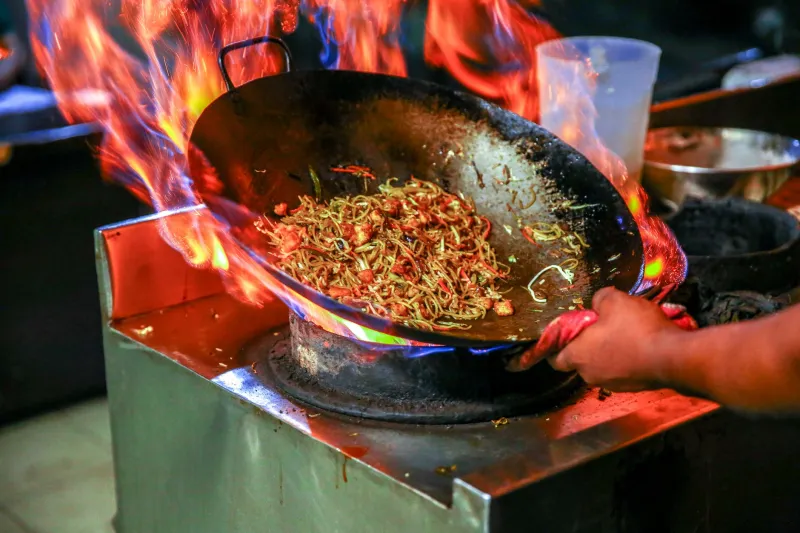
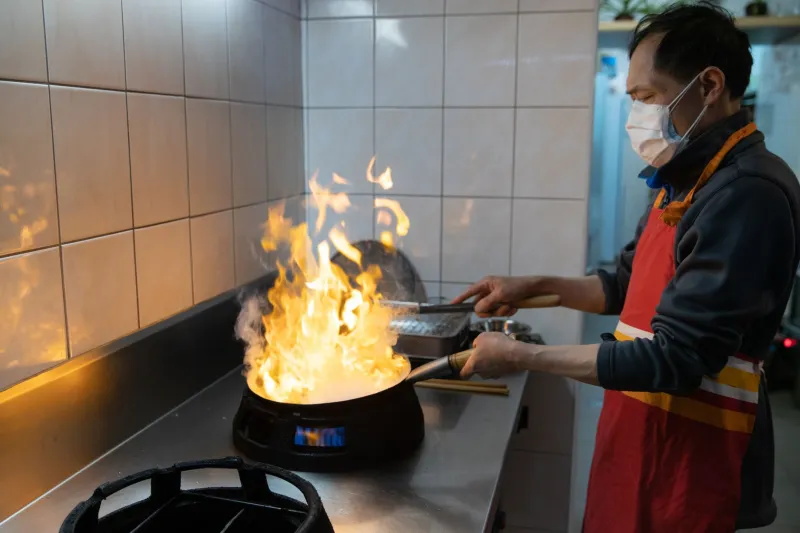
Traditional Shanghai braising happens on the stovetop over a flame that the cook manages actively. High heat at the start to build color and trigger the Maillard reaction. A drop to a steady, low simmer once the liquid goes in. Then, toward the end, a deliberate increase in heat with the lid partially or fully removed to drive off moisture and reduce the sauce. That three-phase approach is what creates the layered complexity that makes hong shao dishes so deeply satisfying.
The Sugar Situation
Shanghai cuisine uses sugar differently than most American home cooks expect. It's not there to make things sweet. It's there to balance the saltiness of soy sauce, to encourage browning, and to contribute to that lacquered, glossy sauce finish. Rock sugar is traditional, and it behaves differently from granulated white sugar — it dissolves more slowly and produces a more nuanced caramelization.
In a slow cooker, sugar doesn't caramelize. It just dissolves into the liquid and stays there, making your braise taste sweet in a flat, one-dimensional way rather than developing the rounded, complex sweetness that comes from actual caramelization. It's the difference between candy and toffee — one is just sugar, the other is sugar that's been transformed by heat and time.
How to Braise the Shanghai Way Without Specialized Equipment
Good news: you don't need a clay pot or a specialized Chinese braising vessel to do this right. A heavy-bottomed Dutch oven — the kind most American home cooks already own — is genuinely excellent for Shanghai-style braising. Cast iron or enameled cast iron holds heat evenly and retains it well, which is exactly what you want.
A few principles to keep in mind:
Start on the stovetop, always. Sear your protein in a hot, dry pan or in the Dutch oven itself before any liquid goes in. This step builds color and flavor that no amount of slow cooking can replicate after the fact.
Manage your liquid volume. Shanghai braises use less liquid than you might expect. The goal is not to submerge the protein but to surround it, so the liquid reduces around the food rather than drowning it.
Cook with the lid on, then off. For most of the cooking time, keep the lid on to trap heat and gently braise the meat. In the final 15 to 20 minutes, remove the lid and raise the heat slightly to reduce the sauce to a coating consistency.
Stay in the kitchen. This is the hardest adjustment for American cooks trained on set-it-and-forget-it convenience. Shanghai braising rewards attention. Check your liquid level every 20 minutes. Taste it. Turn the meat if one side is browning more than the other. The active engagement is part of the process.
The Payoff Is Worth It
Look, slow cookers have their place. A pot of chili or a pulled pork shoulder for a weeknight dinner? Sure. But Shanghai braising is a different category of cooking entirely. It's not just about making meat tender — it's about building a sauce that tells a story, developing flavors that couldn't exist without heat management and time and a cook who's paying attention.
When you pull a piece of hong shao rou out of a properly reduced braising sauce, the glaze on the outside is almost jewel-like. The fat is translucent and yielding. The sauce on the plate is thick enough to coat a spoon. That's not something that happens by accident, and it's definitely not something that happens in a slow cooker.
Put the Crockpot away for this one. Your braise will thank you.