When Western Recipes Meet a Wok: What Goes Wrong and How to Make It Right
Let's be honest. At some point, you looked at your carbon steel wok sitting on the stovetop and thought: why not? You were making a quick weeknight pasta, or maybe a simple garlic butter chicken, and the wok was already out. It's a pan. It gets hot. Seemed logical.
Then something went sideways. The garlic burned before anything else cooked. The sauce turned into a sad, watery puddle. The chicken steamed instead of seared. You blamed the wok.
Here's the thing — the wok didn't fail you. The recipe did. Or more accurately, the assumptions baked into that recipe did. Western cooking techniques are built around entirely different equipment, different heat dynamics, and a fundamentally different philosophy about how food should meet fire. When you drop those techniques into a wok without adjusting, the results are almost always disappointing.
But here's the good news: with a few smart adaptations, a wok can actually outperform a skillet or saucepan on a surprising number of Western dishes. You just have to stop fighting its strengths.
The Geometry Problem Nobody Talks About
Most Western cookware — your 12-inch skillet, your straight-sided sauté pan — is designed to distribute heat relatively evenly across a flat surface. The walls are low or straight, and the cooking zone is wide. This geometry supports techniques like gentle reductions, even browning across a whole chicken breast, and slow aromatics that bloom without scorching.
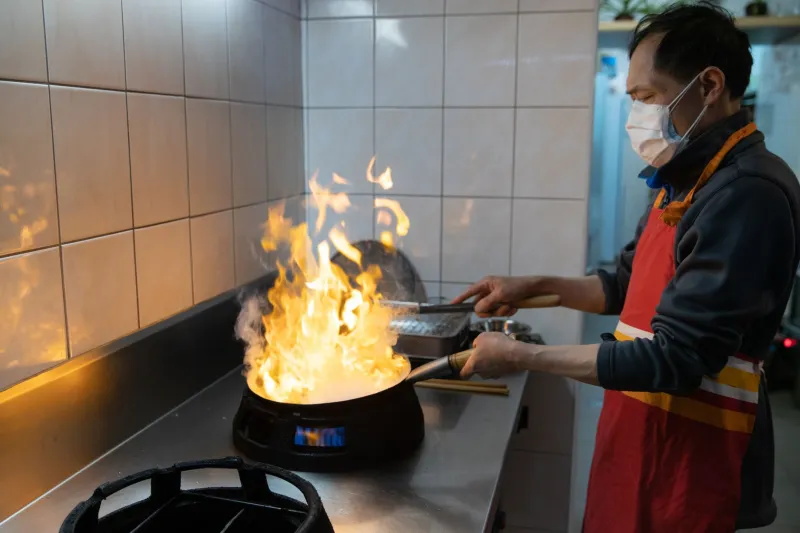
A wok is shaped nothing like that. It's a cone. Heat concentrates intensely at the bottom and dissipates rapidly as you move up the curved sides. That's not a flaw — it's the whole point. Shanghai cooks use that gradient deliberately, moving food from the screaming-hot center to the cooler edges to control doneness in real time. It's a dynamic cooking surface, not a static one.
When you pour a Western recipe directly into that geometry — say, a low-and-slow sauté of onions and garlic in butter — the concentrated heat at the bottom turns a 10-minute task into a 90-second disaster. The butter browns, then burns. The garlic follows. You're left with bitter aromatics before the recipe has even started.
The Low-and-Slow Trap
A huge percentage of Western savory cooking begins with some version of the same instruction: heat olive oil over medium-low, add aromatics, cook gently until softened. This technique works beautifully in a wide, flat skillet where heat is diffuse and controllable. In a wok, medium-low heat at the bottom still concentrates enough energy to scorch delicate ingredients fast.
The fix isn't to abandon the technique — it's to relocate it. If you need to soften onions or develop garlic without burning, push them up the sides of the wok where the heat is gentler. Or pre-cook your aromatics in a separate small pan, then add them to the wok at the right moment. Shanghai cooks don't spend a lot of time babysitting aromatics in a wok — they treat them as a quick flavor hit rather than a foundation built over time.
Alternatively, embrace the wok's speed. Caramelized onions in a wok can happen in minutes with high heat and constant movement, rather than the 30-to-45-minute slow process in a skillet. The result tastes slightly different — more charred at the edges, less uniformly sweet — but it's genuinely delicious in its own right.
Deglazing: A Technique That Needs a Rewrite
Deglazing is a cornerstone of Western sauce-making. You sear something, build up a layer of browned bits on the pan bottom, then hit it with wine or stock to lift all that flavor into a sauce. It's elegant, it's efficient, and it completely falls apart in a wok.
Why? Two reasons. First, a well-seasoned wok's nonstick surface means you're not building the same kind of sticky fond that deglazing depends on. Second, the curved shape makes it difficult to reduce a liquid evenly — it pools at the bottom and either evaporates instantly or sits in a shallow puddle that refuses to reduce properly.
If you want to build a pan sauce in a wok, the approach needs to shift. Instead of deglazing after the fact, think about adding your liquid — wine, soy sauce, stock, whatever — while the food is still in the wok, then using high heat and constant motion to reduce it into a glaze that coats the ingredients directly. This is essentially the Shanghai method for finishing stir-fries with a sauce, and it produces a result that's arguably more flavorful because every piece of food gets coated rather than sitting in a pool at the bottom.
Searing: Where the Wok Actually Wins
Here's where Western cooks are leaving a lot on the table. A properly preheated carbon steel wok gets significantly hotter than most home skillets, and that heat advantage is massive for searing. Chicken thighs, steak strips, shrimp — all of these develop a better crust in a ripping-hot wok than they do in a cast iron skillet that took 10 minutes to preheat.
The catch is that you have to commit. The wok needs to be genuinely hot before anything goes in — not warm, not medium-high, but smoking. And the food needs to go in dry. Any moisture on the surface of your protein immediately creates steam, which kills the sear before it starts. Pat everything dry, let the wok smoke, add just enough oil to coat the bottom, then lay the food in and leave it alone for 60 to 90 seconds before moving it.
This is one area where the wok's physics work directly in your favor for Western dishes. If you've ever been frustrated that your chicken never browns the way it does in restaurant photos, the answer might just be that your pan has never been hot enough.
Pasta Sauce: An Unexpected Win
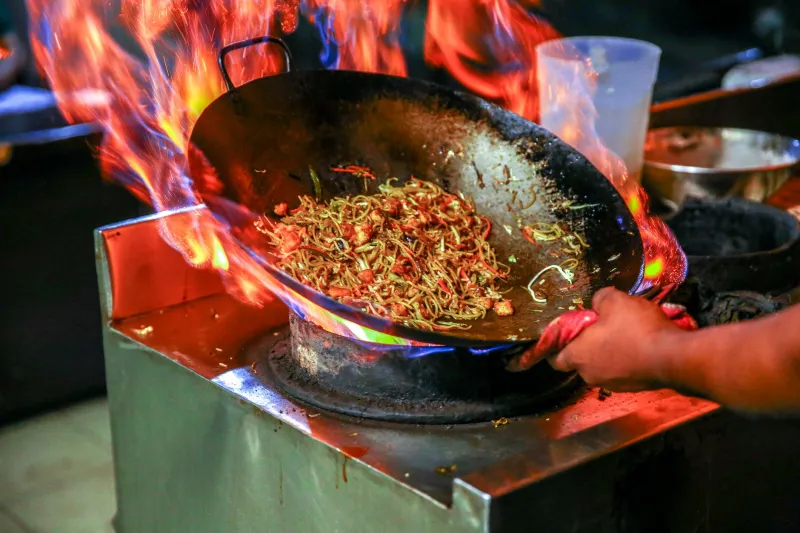
This one surprises people. A wok is actually a fantastic vessel for finishing pasta, specifically because of that curved shape that seemed like a liability before. When you toss cooked pasta in a wok over high heat with a small amount of sauce, the motion and geometry coat every strand evenly and quickly, and the heat reduces any excess liquid almost instantly. The result is pasta that's glossy, well-coated, and not watery — which is exactly what you're going for.
The trick is to think of it less like making a sauce in the wok and more like finishing the pasta in it. Build your sauce separately, cook your pasta, then bring them together in the wok for the final minute or two of high-heat tossing. It's not that different from how Shanghai cooks finish noodle dishes, and it works for everything from cacio e pepe to a simple aglio e olio.
The Mindset Shift That Changes Everything
At its core, the mismatch between Western recipes and wok cooking comes down to pace. Western technique often values patience — long braises, slow reductions, gentle coaxing of flavor. Wok cooking values speed and intensity. It's not that one is better; they're just different philosophies.
When you pick up a Western recipe and decide to cook it in a wok, the most useful question to ask isn't "how do I make this work?" but rather "what does this dish actually need, and can the wok deliver that?" Sometimes the answer is yes, with adjustments. Sometimes the wok can do it better than the original method. And occasionally, some techniques genuinely belong in a different pan.
But more often than not, the wok wins — once you stop expecting it to behave like something it isn't.