Ditch the Nonstick: Why Carbon Steel Woks Are the Secret Behind Real Shanghai Cooking
The Pan Is Lying to You
You followed the recipe. You prepped your ingredients, got your mise en place together, maybe even splurged on a decent bottle of Shaoxing wine. And yet — your stir-fry still tastes like a sad, steamed version of something that should've been magnificent. Sound familiar?
Here's the uncomfortable truth: it's probably not your technique. It's your pan.
Across Shanghai kitchens — from cramped apartment galley setups to bustling home dining rooms where aunties cook for eight without breaking a sweat — the pan of choice has always been carbon steel. Not nonstick. Not stainless. Not cast iron. Carbon steel. And there are real, practical reasons why that tradition has held firm for centuries while American kitchens keep cycling through the latest ceramic-coated, PTFE-sprayed, influencer-endorsed cookware du jour.
What's Actually Wrong With Nonstick
Nonstick pans are genuinely useful tools — for eggs, for delicate fish, for the kinds of tasks where nothing should stick and nothing needs to brown hard. But stir-frying? That's a different beast entirely.
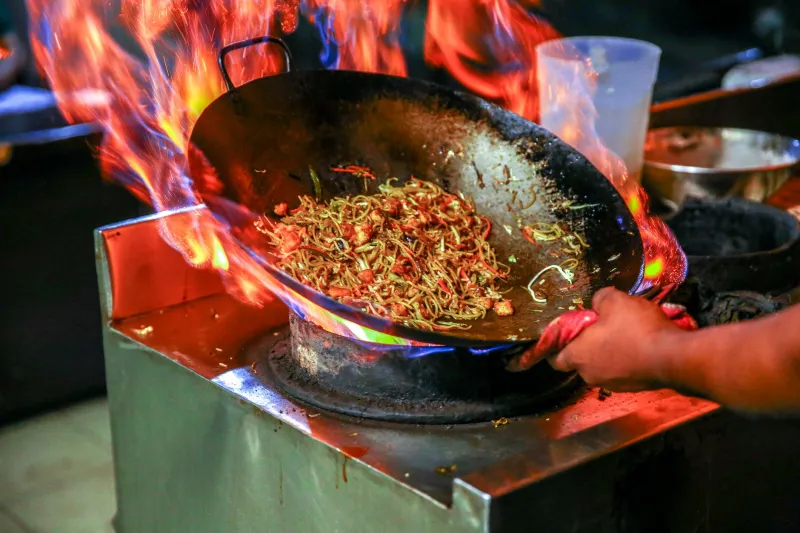
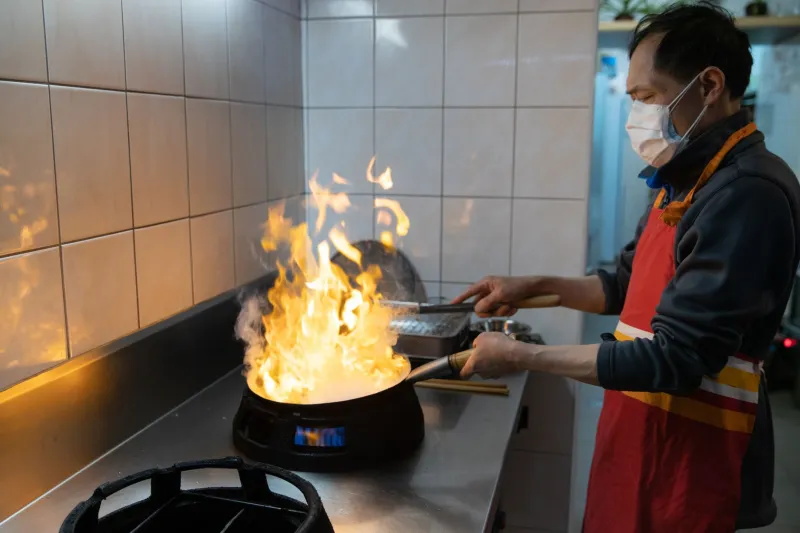
Authentic Shanghai cooking depends on high, sustained heat. Dishes like hong shao rou (red-braised pork), sautéed water spinach with garlic, or even a simple scrambled egg with tomato rely on a pan that can take serious thermal punishment and recover fast. Nonstick coatings have a ceiling — most manufacturers recommend keeping temperatures under 500°F to avoid degrading the coating. A properly preheated carbon steel wok on a gas burner? It can hit 1,200°F at the center. That's not a typo.
That extreme heat is exactly what creates wok hei — the smoky, slightly charred, almost ineffable quality that separates restaurant-level stir-fry from the home version. Nonstick pans physically cannot get there. They'll start off-gassing before you even get close.
Beyond the temperature ceiling, nonstick surfaces don't develop the kind of fond — those browned, caramelized bits that stick to the pan and build flavor — that carbon steel does. Every time you cook in a seasoned carbon steel wok, you're layering in complexity. Nonstick just... releases everything cleanly, which sounds like a feature until you realize you're also releasing all the flavor.
Why Carbon Steel Is Different
Carbon steel sits in a sweet spot between cast iron and stainless steel. It's lighter than cast iron (critical when you're tossing vegetables at high speed), more responsive to temperature changes, and unlike stainless, it develops a natural nonstick patina over time through seasoning.
The material is essentially iron with a small percentage of carbon — simple, ancient, and brilliantly effective. Shanghai cooks have been using versions of this pan for so long that the techniques built around it are baked into the cuisine itself. The curved sides that let you push food up and away from the heat. The flat-bottomed variations designed for modern home stoves. The way you can go from a screaming-hot sear to a gentled simmer just by adjusting the flame and shifting food to the cooler rim. None of that works the same way in a nonstick skillet.
And here's the thing about a well-seasoned carbon steel wok: it gets better with age. Every batch of scallion oil, every round of garlic sautéed in a splash of lard, every high-heat blast of bok choy adds to the pan's character. After a year of regular cooking, a carbon steel wok is a fundamentally different — and better — tool than it was on day one. Nonstick starts degrading almost immediately.
How to Season a Carbon Steel Wok (The Right Way)
New carbon steel woks come with a factory coating — usually a thin layer of oil or anti-rust treatment — that needs to come off before you start cooking. Here's how to get it right:
Step 1: Scrub it clean. Use hot water, dish soap, and a stiff brush. This is the one time you'll use soap on your wok. Get all that factory residue off.
Step 2: Dry it completely. Put it on the stovetop over medium heat until every trace of moisture evaporates. Carbon steel rusts fast, so don't skip this.
Step 3: Heat until it changes color. Crank the heat to high and let the wok heat until you start seeing the metal shift from silver to a blue-gray or even slightly yellow hue. This is the steel oxidizing — it's a good sign.
Step 4: Add oil, coat, and smoke. Drop in a high-smoke-point oil — flaxseed, grapeseed, or lard all work well. Tilt and swirl to coat every interior surface, then let it smoke off completely. Wipe away the excess with a paper towel (use tongs — it's hot).
Step 5: Repeat. Do three to four rounds of this. Each layer of polymerized oil builds the patina that will eventually make your wok naturally nonstick and flavor-rich.
The first few meals you cook should be oil-heavy — think scallion oil, or something with plenty of fat. Avoid acidic dishes like tomato-based sauces early on. Let the seasoning develop before you throw anything at it.
Maintaining the Wok (It's Easier Than You Think)
Here's where American home cooks often get nervous: carbon steel requires a little care, and that scares people off. But the maintenance is genuinely minimal once you understand what the pan actually needs.
After cooking, rinse with hot water while the wok is still warm. Use a bamboo brush or a chainmail scrubber for any stuck bits — avoid dish soap, which strips the seasoning. Dry it immediately and thoroughly on the stove over low heat. Then wipe a tiny amount of oil across the interior surface before putting it away.
That's it. The whole routine takes about two minutes. Compare that to the careful handling nonstick requires — no metal utensils, no high heat, replace every year or two — and carbon steel starts looking a lot less demanding.
Making the Switch
You don't need to spend a fortune. A 14-inch flat-bottomed carbon steel wok from a Chinese kitchen supply store (or a reputable online retailer) will run you somewhere between $30 and $60. Brands like Joyce Chen, Yosukata, and the woks sold through most Asian grocery stores are solid starting points. Avoid anything with a nonstick coating — that defeats the entire purpose.
If you're cooking on a standard American gas range, a flat-bottomed wok works best. Induction cooktop? Look specifically for carbon steel woks labeled induction-compatible — the material conducts well, but the base needs to be flat enough to make contact.
The transition will feel awkward for the first week or two. Your wok will look uneven. Food might stick in spots before the seasoning evens out. Push through it. Shanghai cooks didn't build one of the world's most technically sophisticated cuisines on equipment that needed babying — and neither should you.