Stop Shaking the Pan and Start Cooking: The Real Mechanics Behind the Wok Toss
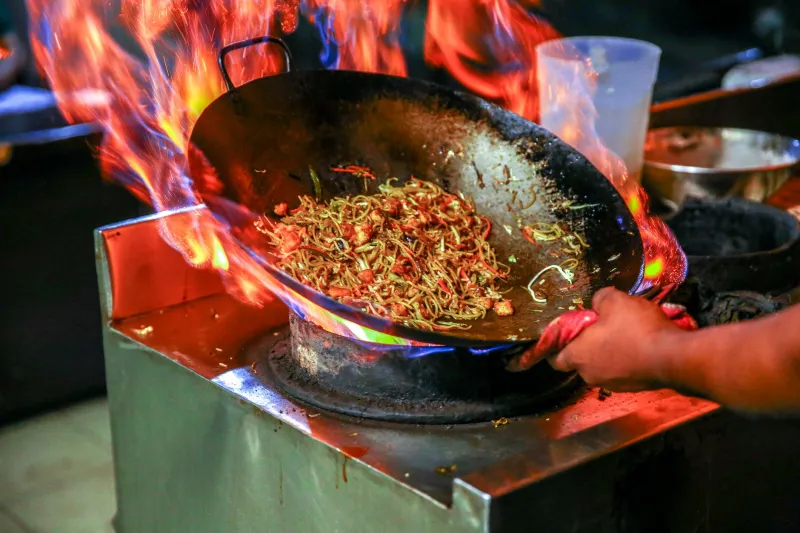
Here's something nobody tells you when you first buy a wok: the toss isn't the point. The heat is.
Every time you've watched a chef at a Chinese restaurant send vegetables flying through the air and thought I could never do that at home, you were looking at the wrong thing. The showmanship is a side effect. The real goal—the thing that actually matters for Shanghai-style cooking—is getting every piece of food into contact with the hottest surface in the pan, over and over again, in the shortest amount of time possible. The toss is just the most efficient way to do that.
Once that clicks, the whole technique stops being intimidating and starts being logical.
Why Shanghai Cooking Demands More From Your Pan
Shanghai cuisine sits in an interesting spot. It's not as aggressively fiery as Sichuan cooking, and it doesn't lean on the long, slow braises you'd find in some other regional Chinese traditions. Instead, a lot of classic Shanghai dishes—think stir-fried greens with garlic, quick-cooked river shrimp, or the kind of egg-and-tomato dish that every Shanghai household has a slightly different version of—live and die by timing and heat control.
When you cook these dishes properly, the vegetables stay vibrant and slightly crisp. The proteins get a quick sear without turning rubbery. There's a faint smokiness underneath everything, not from adding a smoky ingredient, but from the wok itself getting hot enough to briefly char the natural sugars in the food. That's wok hei—a concept we've explored before on this site—and achieving it at home is genuinely possible if you stop treating the wok like a regular skillet.
The toss is one of the primary tools for building that result.
What's Actually Happening When You Toss
Let's get into the mechanics for a second, because this is where most beginner guides completely skip over the good stuff.
A wok's curved surface creates an uneven heat map. The very bottom of the pan—the part sitting directly over the flame—is the hottest zone. The sides are cooler, and the air above the wok is cooler still. When you leave food sitting flat at the bottom without moving it, it cooks unevenly. The bits touching the center scorch while the edges barely sizzle.
The toss solves this by doing two things simultaneously. First, it rotates the food through different temperature zones, so nothing overcooks in one spot. Second—and this is the part people miss—it briefly exposes the food to oxygen. That split second of air contact, combined with the high heat when the food lands back on the wok surface, is what creates those micro-caramelized edges that make stir-fry taste like stir-fry instead of steamed vegetables in a pan.
You're not just moving food around. You're cycling it through a heat gradient and letting it breathe at the same time.
The Setup Matters More Than the Skill
Before you even think about wrist technique, you need to get your setup right—because bad setup is the number one reason American home cooks fail at this.
Use a carbon steel wok, not stainless, and definitely not nonstick. Carbon steel can handle the kind of heat you need. Nonstick coatings start breaking down at temperatures that are actually too low for proper stir-frying.
Get your wok as hot as possible before adding oil. On a standard American gas range, this means letting the wok sit over high heat for two to three minutes until you see the first wisps of smoke. If you're on an electric stove, preheat longer and accept that you're working at a slight disadvantage—but it's still doable.
Add oil and let it shimmer before anything goes in. The oil should move like water, not like cold syrup. If it's pooling and sitting still, the pan isn't hot enough yet.
Don't overcrowd. This is critical. Too much food in the wok at once drops the temperature instantly, and you end up steaming instead of searing. Cook in smaller batches if you have to. Shanghai home kitchens are tiny, and the cooks there figured this out generations ago.
The Toss Itself: A Step-by-Step Breakdown
Okay, now the actual movement. Forget the dramatic aerial flips you've seen on cooking shows. Start smaller.
Step 1: Get a feel for the weight. Before you cook anything, practice with a dry wok and a handful of dried beans or rice. Hold the handle with your dominant hand, tilt the wok slightly away from you at roughly a 30-degree angle, and use a quick forward-and-upward flick of the wrist to push the contents up the far side of the wok. You're not throwing things into the air—you're sliding them up the curved wall and letting gravity bring them back down.
Step 2: Use your whole arm, not just your wrist. The motion comes from the elbow and shoulder working together with the wrist. Think of it less like flipping a pancake and more like a short, controlled scoop-and-push. The wok stays relatively low. You're not launching anything.
Step 3: Time your tosses. In practice, you'll toss every ten to fifteen seconds during a stir-fry, not constantly. Let the food sit and make contact with the hot surface, then toss to redistribute and aerate, then let it sit again. That rhythm is what builds flavor.
Step 4: Use a spatula as backup. There's no shame in using a wok spatula alongside the toss—professional Shanghai cooks do it all the time. The spatula helps you scrape up anything sticking to the bottom and keeps things moving when the toss alone isn't enough.
Building the Muscle Memory
Here's the honest truth: the first few times you try this, it will feel awkward. Your tosses will be too timid, or you'll overshoot and send a piece of bok choy onto the stove. That's normal.
The way to get past it is repetition with low stakes. Make simple stir-fried greens—spinach, bok choy, morning glory if you can find it—two or three times a week while you're learning. These are fast, cheap, and forgiving. They're also genuinely delicious when done right, which is motivation to keep practicing.
Within a month of regular cooking, the motion will start to feel natural. Your instincts for heat will sharpen. You'll start to hear the difference between a properly hot wok and one that needs another minute, just from the sound the food makes when it hits the surface.
That's when Shanghai cooking starts to open up for you. Not because you've mastered some exotic skill, but because you've learned to work with heat instead of against it.
And once you're there, that egg-and-tomato dish—the one that every Shanghai grandmother makes slightly differently—will finally taste the way it's supposed to. Simple, fast, and completely alive.