Hand-Held and Irresistible: How Shanghai Street Snacks Are Quietly Outclassing American Junk Food
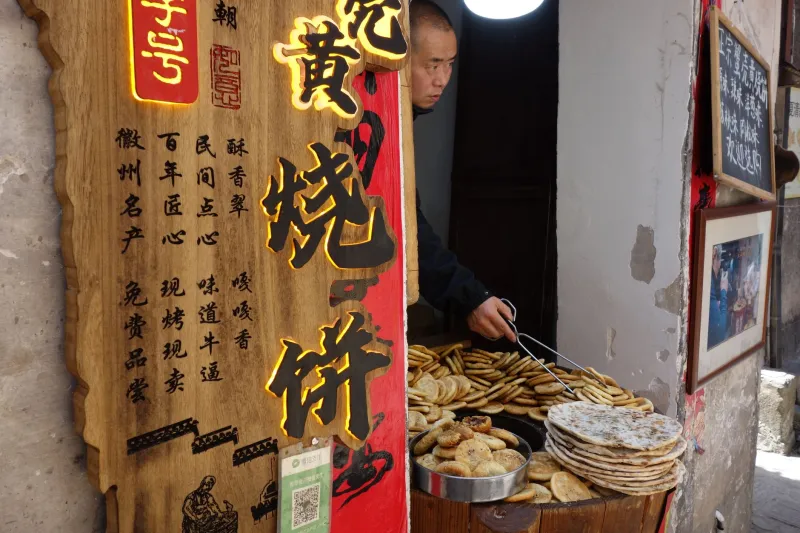
There's a specific kind of satisfaction that comes from eating something great with your hands, standing up, on a sidewalk, with no real plan for the next ten minutes. Americans know this feeling well — it's the logic behind drive-throughs, food trucks, and the entire snack food industry. But if you've ever eaten your way through Shanghai's street food scene, you start to realize that the US version of casual snacking has been leaving a lot on the table.
Shanghai's street snacks aren't just convenient. They're crafted. They come with centuries of technique behind them, textures that fast food has never figured out how to replicate, and flavors that manage to be both deeply comforting and genuinely surprising. And the best part for American home cooks? A lot of them are more approachable to make than you'd think.
The Scallion Pancake: Crispy Layers That Hit Different
Let's start with the one that tends to convert people first. The cong you bing — scallion pancake — looks simple enough on the surface. A flat, pan-fried bread with green onion running through it. But the technique behind it is what makes it something special.
The dough is made with hot water, which gives it a pliability that regular bread dough doesn't have. It gets rolled out, brushed with sesame oil and a hit of salt, then loaded with chopped scallions before being rolled into a log, coiled like a cinnamon roll, and flattened again. That rolling and refolding is what creates the flaky, layered interior — all those thin strata of dough separated by oil and scallion that shatter satisfyingly when you bite in.
Cook it in a hot skillet until both sides are deeply golden, and you've got something that makes a frozen breakfast sandwich feel genuinely embarrassing by comparison. The outside crackles. The inside is chewy and rich with sesame and onion. It's portable, it's filling, and it costs almost nothing to make.
For the home cook: the dough comes together in minutes. The only real technique to master is the coiling and pressing step, which you'll nail by the second or third pancake. Use a cast iron skillet if you have one — the even heat helps you get that crust right.
Sesame Balls: Chewy, Crispy, Filled With Something Good
Jian dui — sesame balls — are what happens when a culture figures out that deep-fried glutinous rice dough coated in sesame seeds and filled with something sweet is basically a perfect food.
The exterior is made from glutinous rice flour, which gives it that characteristic chew that wheat-based doughs simply don't deliver. When you fry a sesame ball, something slightly magical happens: the dough puffs outward as steam builds inside, creating a hollow center around the filling. The sesame seeds toast against the oil and stick to the outside. What you end up with is crispy on the outside, chewy through the shell, and then — depending on the filling — either sweet red bean paste, lotus paste, or black sesame paste at the center.
The texture contrast alone is worth talking about. There's nothing quite like it in the American snack canon. It's not a donut. It's not a fried pie. It occupies its own category entirely, and once you've had a good one, you'll find yourself thinking about it at random moments for weeks.
Glutinous rice flour is available at most Asian grocery stores and increasingly at mainstream supermarkets in cities. The frying technique is straightforward — medium oil temperature, patient rolling to keep the shape — and the results are genuinely impressive for a homemade snack.
Ci Fan Tuan: The Breakfast Brick That Sustains You All Morning
If the scallion pancake is Shanghai's answer to a breakfast sandwich, the ci fan tuan is its answer to a burrito — and it wins that comparison comfortably.
A ci fan tuan is a cylinder of sticky glutinous rice wrapped tightly around a filling, usually a length of you tiao (the Chinese fried dough stick), pickled vegetables, pork floss, and sometimes a preserved egg. The whole thing gets pressed together in a piece of plastic wrap or bamboo mat, twisted tight into a log shape, and handed to you to eat on the go.
What makes it work is the interplay of textures and flavors packed into every bite. The sticky rice is dense and slightly sweet. The you tiao inside has gone a little soft from the steam but still provides a chewy, oily contrast. The pickled vegetables cut through with acidity. The pork floss adds a savory, almost fluffy layer. It's a complete flavor experience in a handheld package, and it'll keep you full until well past noon.
For American home cooks, ci fan tuan is a brilliant make-ahead option. Cook a batch of glutinous rice, prep your fillings, and you can assemble these in minutes on a weekday morning. You tiao can be found frozen at Chinese grocery stores, or you can substitute a plain breadstick in a pinch — the spirit of the thing holds up.
Why These Snacks Hit Harder Than Anything in the Chip Aisle
Here's the thing about Shanghai street snacks: they were designed for real life. They evolved in a city that has always moved fast, where workers needed something satisfying and affordable that they could eat while walking to work. They weren't engineered in a lab to maximize addictiveness through artificial flavor compounds. They were refined over generations through the simple feedback loop of people choosing to come back for more.
That's a different kind of quality. The satisfaction you get from a properly made scallion pancake or a fresh sesame ball comes from actual ingredients doing actual things — caramelized sugars, toasted sesame, fermented pickles, the Maillard reaction on glutinous rice. It's real, and your body recognizes it as real in a way that a bag of fluorescent cheese puffs never quite manages.
America is already falling for these flavors. Scallion pancakes have been showing up on brunch menus in New York, LA, and Chicago for a few years now. Sesame balls have started appearing in mainstream bakeries. The appetite is clearly there.
But the best version of any of these snacks isn't at a restaurant charging fourteen dollars for a pancake with a fancy dipping sauce. It's the one you make at home on a Saturday morning, slightly imperfect, eaten immediately off the pan while it's still crackling. That's the Shanghai experience — unpretentious, satisfying, and entirely worth getting your fingers a little sticky for.