Cart Check: What a Shanghai Grandmother Buys at the Market (And What That Says About You)
The Cart Doesn't Lie
Next time you're at the grocery store, take a look at what's in your cart. If you're like most American home cooks, there's probably a protein you found on sale, a couple of vegetables that looked good under the fluorescent lights, and a handful of ingredients tied to a specific recipe you bookmarked three weeks ago. You're shopping reactively. You're shopping by occasion.
A Shanghai grandmother shops differently. She's not hunting for a recipe. She's restocking a system.
That difference—subtle on the surface, enormous in practice—is the reason her kitchen can produce a deeply satisfying meal on a Tuesday night with what looks like nothing in the fridge, while yours requires a second trip to the store before you can even start.
The Pantry Is the Point
In a traditional Shanghai home kitchen, the pantry isn't a backup plan. It's the foundation. Before a single fresh ingredient hits the cutting board, the pantry has already done most of the heavy lifting.
So what's actually in there? A few things you probably already have, and a few things that might surprise you.
Soy sauce—but not just one. A Shanghai pantry typically holds at least two: a light soy sauce for seasoning and a dark soy sauce for color and body. Light soy sauce is saltier and thinner. Dark soy sauce is richer, slightly sweet, and turns a braise the color of mahogany. Using only one is like painting with half a palette.
Shaoxing rice wine. This is non-negotiable. It goes into marinades, braises, stir-fries, and soups. It's the reason Shanghai food has that particular depth that people can never quite identify when they eat it at a restaurant. You can find it at most Asian grocery stores, and once you have it, you'll wonder how you cooked without it.
Fermented staples. Doubanjiang (fermented bean paste), black vinegar, and fermented tofu show up in a Shanghai pantry the way ketchup and mustard show up in an American fridge—quietly, reliably, always. These aren't exotic extras. They're the umami backbone of the cuisine.
Dried goods. Dried shiitake mushrooms, dried lily buds, dried wood ear fungus. These sit in jars and wait. When you need them, you soak them. The soaking liquid becomes broth. Nothing is wasted.
The Freezer Situation
Here's something American kitchens almost never get right: the freezer as an active cooking tool rather than a graveyard for forgotten leftovers.
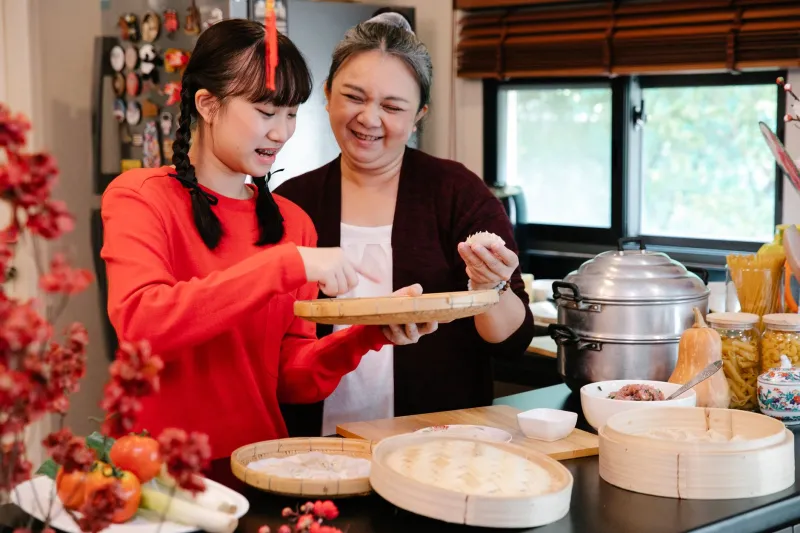
A Shanghai grandmother's freezer has a few key things. Pork—usually in a couple of forms, because pork is the default protein of Shanghai cooking. Dumplings she made herself on a Sunday afternoon and froze in batches. Maybe some hand-rolled noodles. Possibly a container of homemade stock.
The freezer is stocked intentionally, not accidentally. She's not freezing things because she didn't finish them. She's freezing things specifically to have them later.
For American cooks looking to replicate this, start small. Make a double batch of dumpling filling next time and freeze half. Cook a pork shoulder and freeze the braised meat in portions. Buy good-quality store-bought soup dumplings from an Asian grocery and keep them on hand for nights when cooking from scratch isn't happening. The goal is to have real options waiting for you, not just freezer-burned mystery proteins.
The Fresh Produce Philosophy
This is where the biggest gap between Western and Shanghai shopping habits shows up.
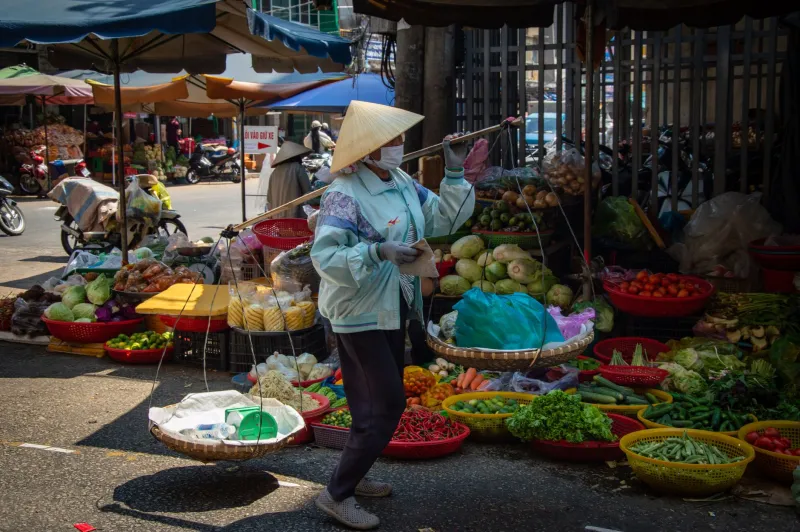
A Shanghai grandmother buys what's in season, what looks alive, and what's priced right—in that order. She's not attached to a specific vegetable because a recipe called for it. She buys Chinese cabbage when it's gorgeous and cheap. She grabs a handful of garlic chives because they're fresh. She picks up winter melon in summer and taro in fall.
Her meals are built around what's available, not the other way around.
For American shoppers, this is a mindset shift more than a shopping technique. It means walking into the produce section without a list and letting what looks good drive your decisions. It means learning a few flexible techniques—a simple stir-fry, a quick braise, a light soup—that can accommodate almost any vegetable rather than requiring a specific one.
Green vegetables in a Shanghai kitchen are almost always cooked simply: blanched in salted water, stir-fried quickly in oil with garlic, or added to broth at the last minute. The technique stays the same. The vegetable rotates with the season.
What She Doesn't Buy
Just as revealing as what's in her cart is what's not.
You won't find a Shanghai grandmother loading up on pre-marinated proteins, bottled stir-fry sauces, or single-use ingredients bought for one specific recipe. She doesn't need them. Her pantry already has everything required to build flavor from scratch, and she's been doing it long enough that the process is automatic.
This is the hardest part to replicate, not because the ingredients are hard to find, but because it requires letting go of the recipe-centric way most of us learned to cook. American cooking culture is deeply tied to following instructions. Shanghai cooking culture is tied to understanding principles.
Building Your Own Shanghai Pantry
You don't need to overhaul everything at once. Start with five items that will immediately change what you can cook:
- Light soy sauce (Pearl River Bridge or Lee Kum Kee are widely available)
- Dark soy sauce (same brands, different bottle)
- Shaoxing rice wine (look in the international aisle or any Asian grocery)
- Black vinegar (Chinkiang brand is the standard)
- Dried shiitake mushrooms (available almost everywhere now)
Once these are in your pantry, you have the foundation. Add doubanjiang when you find it. Pick up fermented tofu if you're feeling adventurous. Keep a bag of dried noodles and a block of firm tofu in the fridge as default proteins.
Then start shopping the way a Shanghai grandmother does: with your eyes open, your pantry in mind, and no recipe telling you what to do.
Your cart is going to look very different. In the best possible way.