No Recipe, No Problem: What Shanghai Grandmothers Know About Cooking That Most Americans Never Learn
Open any popular American cooking app right now and you'll find recipes with gram-precise measurements, step-by-step photos, and user reviews complaining that the dish "didn't turn out right" because they used large eggs instead of medium. It's a whole culture built around the idea that cooking is a procedure — something you execute correctly or incorrectly based on how closely you follow instructions.
Then there's the way Jenny Liu's grandmother taught her to make hong shao rou.
"She never once said 'two tablespoons of soy sauce,'" says Liu, a 34-year-old home cook in Chicago whose family immigrated from Shanghai in the 1990s. "She'd pour some in, look at the color of the pork, smell it, and adjust. When I asked how much, she'd just say, 'Until it looks right.' I was so frustrated at first. Now I cook the same way and I wouldn't trade it for anything."
This is the Shanghai grandmother effect — and it might be the most underrated culinary education in the world.
The Kitchen as Classroom (Without the Syllabus)
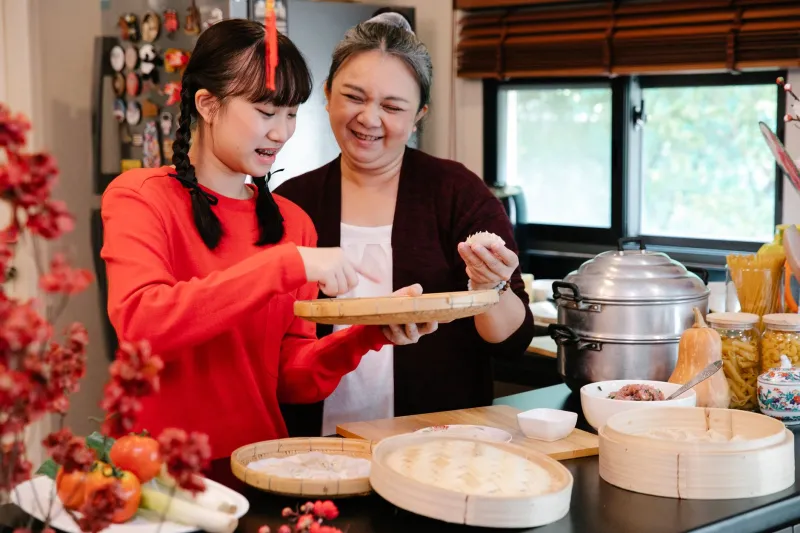
Shanghai's home cooking tradition has always been primarily oral and observational. Knowledge passed from grandmothers to daughters to grandchildren not through cookbooks or cooking shows, but through proximity. You stood at the stove and watched. You smelled when the ginger hit the oil. You listened for the sound of properly dried vegetables hitting a screaming hot wok versus wet ones that steam and go limp. You learned to read a dish the way a musician learns to read a room — not from sheet music, but from feel.
This approach isn't accidental or born of necessity. It reflects a deeper philosophy about what cooking actually is. In Shanghai kitchens, cooking has always been understood as a living practice, not a fixed formula. Ingredients vary by season, by vendor, by year. A recipe that demands exactly 400 grams of pork belly misses the point entirely — the pork you bought this Tuesday is different from the pork you bought last month, and a good cook adjusts for that reality.
American cooking culture, by contrast, has spent decades moving in the opposite direction. The rise of food media, meal kit delivery, and recipe aggregator sites has created a generation of home cooks who are technically capable but often paralyzed without step-by-step guidance. Ask someone who learned to cook primarily from recipe blogs to "just make something with what's in the fridge" and watch the anxiety set in.
What Gets Lost in Translation
Michael Chen, a 28-year-old line cook in San Francisco who grew up watching his Shanghai-born mother cook, puts it plainly: "My mom never learned from a recipe. She learned by watching her mom, who watched her mom. When she came to the US, she'd go to the Asian grocery store, see what looked good that day, and build the meal around that. That's not a skill you pick up from a YouTube tutorial."
What Chen describes is a kind of culinary fluency — the difference between someone who can translate a language word by word and someone who actually thinks in it. Recipe-dependent cooks are translating. Grandmother-taught cooks are thinking natively.
The distinction shows up most clearly in improvisation. When a dish isn't coming together, a cook trained on recipes will often panic or abandon ship. A cook trained in the Shanghai grandmother tradition will taste, think, and reach for something — a splash of Shaoxing wine, a pinch more sugar, a few drops of black vinegar — because they've internalized enough about flavor relationships to troubleshoot on the fly.
That kind of instinct doesn't come from reading. It comes from repetition and attention.
The Sensory Vocabulary Nobody Teaches You
One of the most striking things about the grandmother method is how heavily it relies on sensory cues that most Western cooking instruction doesn't even bother to name.
Shanghai cooks talk about the color of caramelizing sugar with a specificity that borders on poetic — not just "golden" but a particular amber that means you're thirty seconds from perfect and thirty-one seconds from burned. They describe the smell of a properly seasoned wok, the sound of aromatics that are ready to be joined by protein, the way a sauce should coat a spoon versus cling to it.
This is a whole vocabulary, and it's one that American cooking content largely ignores in favor of timers and temperatures. "Sauté for 3 minutes" tells you nothing about what those 3 minutes are supposed to look, smell, and sound like. A Shanghai grandmother would tell you everything except the number.
Liu remembers her grandmother correcting her not with measurements but with observations. "She'd say, 'The oil isn't hot enough yet — listen.' Or she'd lift the lid off a braise and just shake her head slightly, which meant I needed to let it go longer. She was teaching me to read the food. That's something no recipe can do."
Bringing It to Your Kitchen
So how do you actually adopt this approach if you grew up in a household where cooking meant following a recipe card?
Start by cooking familiar dishes without looking at the recipe after the second or third time you've made them. You already know the rough outline — trust that. Pay attention to what the food is telling you rather than watching the clock. Smell the garlic. Listen to the sizzle. Taste constantly, and not just at the end.
When you cook a Shanghai-style dish — a simple stir-fry, a soy-braised egg, a quick bok choy with garlic — resist the urge to measure everything. Pour the soy sauce until the color looks right. Add sugar until the harshness softens. Taste for balance rather than accuracy.
It will feel uncomfortable at first. That discomfort is the point. You're building a new relationship with your own kitchen.
Chen has a piece of advice he gives to friends trying to cook Chinese food at home: "Stop trying to replicate a recipe exactly and start trying to understand why the recipe works. Once you get that, you can make the dish with whatever you have. That's what my mom does. That's what her mom did. That's the whole thing."
The Real Secret Ingredient
There's a reason Shanghai home cooking has survived for generations without a single standardized recipe — and it's not just tradition for tradition's sake. It's that the grandmother method produces cooks who genuinely understand food, rather than cooks who can follow directions.
In a culture obsessed with optimization and measurement, that kind of embodied, intuitive knowledge is almost countercultural. But spend any time in a Shanghai-influenced kitchen — watching someone taste a broth and adjust it in real time, or seeing a cook look at a pile of vegetables and immediately know what they're going to become — and you start to understand what's been lost in the recipe-first approach.
The best cooking has always been a conversation between the cook and the ingredients. Shanghai grandmothers have known that for centuries. The rest of us are just catching up.