One Wok, One Life: The Shanghai Secret to Cooking That Gets Better Every Year
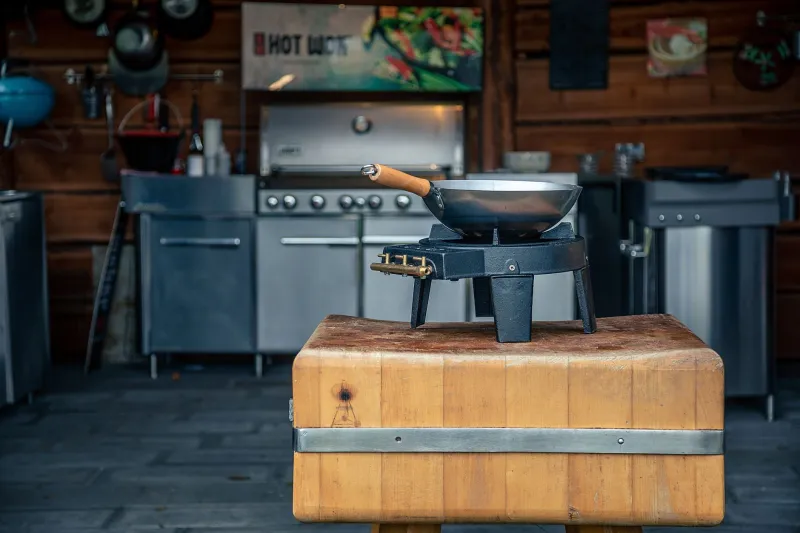
There's a phrase that floats around Shanghai home kitchens, usually muttered by someone's grandmother while she's flipping vegetables with an ease that borders on supernatural: this wok knows me. It sounds sentimental. Maybe even a little dramatic. But spend any time watching a seasoned Shanghai cook at work, and you start to believe it.
In a city where food is practically a love language, the wok isn't treated as equipment. It's treated as a partner. And in America, where we swap out cookware like phone cases and treat every kitchen gadget as a temporary fling, that idea feels almost radical.
The American Relationship With Cookware (It's Complicated)
Let's be honest. Most American kitchens are a graveyard of good intentions. There's the cast iron skillet that got used twice before it rusted. The nonstick pan that scratched within six months. The trendy ceramic set that looked great on Instagram and cooked mediocrely everywhere else. We buy, we try, we abandon.
This isn't entirely our fault. American consumer culture is built on the upgrade cycle — the idea that newer is better, that the next purchase will solve the last purchase's problems. Kitchen stores are full of shiny things promising to make cooking easier, faster, more foolproof.
Shanghai cooks would find this deeply puzzling.
In a traditional Shanghai household, a good wok might outlive its original owner. It gets passed down. It gets talked about. It accumulates decades of cooking history in its blackened, seasoned surface, and that history is considered an asset, not a liability.
What Seasoning Actually Means
Here's where the relationship metaphor earns its keep. Seasoning a carbon steel wok isn't a one-time event — it's an ongoing conversation between cook and tool.
When you first bring a carbon steel wok home, it's raw, reactive, and kind of high-maintenance. You need to burn off the factory coating, scrub it down, dry it completely, and then begin the slow process of building up layers of polymerized oil. This is the seasoning — a microscopic coating that forms when oil bonds to metal at high heat, creating a surface that becomes increasingly nonstick and flavor-retentive over time.
The first few weeks can feel discouraging. Food might stick. The surface looks uneven. You wonder if you made a mistake. Shanghai cooks would tell you to keep going. The wok is learning you as much as you're learning it.
Every time you cook with high heat, every time you oil the surface and let it smoke before adding ingredients, every time you clean it correctly (water, a soft brush, no soap, dry immediately, light oil coat before storage), you're adding another layer. Literally and figuratively.
After six months, something shifts. The surface darkens to a deep, almost lacquered black. Food releases more easily. The wok heats faster and more evenly. It starts to feel like an extension of your hand rather than an obstacle between you and your dinner.
After a year, you stop thinking about the wok at all. That's when you know it's working.
The Emotional Logic of Commitment
This might sound overwrought, but stick with us. There's a real psychological dimension to cooking with the same tool consistently over time.
Shanghai home cooks develop an intuitive understanding of their wok's particular quirks — how quickly it reaches temperature, how it distributes heat across different burners, exactly how much oil it needs before a stir-fry won't stick. This knowledge isn't transferable. It lives in muscle memory, built through repetition with a specific pan.
When you constantly rotate cookware, you never build that fluency. Every new pan resets the learning curve. You're always a beginner.
Committing to one wok, by contrast, means your cooking actually compounds. Skills stack on skills. Confidence grows. And the wok itself becomes more capable alongside you — its seasoning deepens, its performance improves, its surface develops the complex, faintly smoky character that makes Shanghai home cooking taste the way it does.
This is the philosophy baked into Shanghai food culture: quality deepens with time. It doesn't expire.
Practical Steps for Starting Your Own Wok Relationship
If you're ready to commit, here's how to begin on the right foot.
Choose carbon steel over everything else. Cast iron is heavy and slow to heat. Nonstick is fragile and can't handle the high temperatures that Shanghai cooking demands. Carbon steel is lightweight, responsive, and designed to be seasoned and used for decades. Look for a flat-bottomed version if you're cooking on a Western gas or electric range — it'll sit more stably.
Do the initial seasoning properly. Scrub off the factory coating with steel wool and dish soap (this is the one time soap is acceptable). Dry it completely — bone dry, including a few minutes on low heat on the stove. Then apply a thin layer of a high-smoke-point oil (flaxseed, grapeseed, or avocado oil all work well), heat it until it smokes, wipe it down, and repeat three to four times. You're building the foundation.
Cook fatty, savory things first. For the first month, use your wok for bacon, fried eggs, sautéed aromatics, and stir-fries with plenty of oil. Avoid acidic ingredients like tomatoes or vinegar early on — they can strip the seasoning before it's had time to set.
Clean it the Shanghai way. Hot water, a soft brush or sponge, no soap. Dry it immediately and thoroughly. Apply a very thin coat of oil before putting it away. That's it. Every single time.
Don't panic when it looks bad. Uneven patches, slight discoloration, the occasional sticky spot — these are all normal in the early stages. Keep cooking. Keep oiling. The wok is figuring itself out.
When Your Wok Becomes Irreplaceable
There's a moment — and every committed wok owner eventually hits it — when you realize you'd be genuinely upset if something happened to your pan. Not because of what it cost, but because of what it represents. Years of dinners. Hundreds of meals. A surface that's been built, molecule by molecule, through your own cooking.
Shanghai grandmothers understand this implicitly. The best wok in a Shanghai household isn't the newest one. It's the oldest one — the one that's been through the most, that carries the most history, that has been shaped by decades of the same hands cooking the same flavors.
American kitchen culture hasn't caught up to this idea yet. But it's getting there. The same food-obsessed communities that rediscovered sourdough starters and hand-ground coffee are starting to talk about carbon steel woks with the same reverence. There's something deeply satisfying about a tool that improves because you use it — that rewards loyalty with better performance.
Your wok is waiting. Start the relationship. Give it time. And one day, without quite knowing when it happened, you'll find yourself saying the same thing Shanghai grandmothers have been saying for generations.
This wok knows me.
And you'll mean it.