Spin It to Win It: What the Lazy Susan Reveals About the Way Shanghai Actually Eats
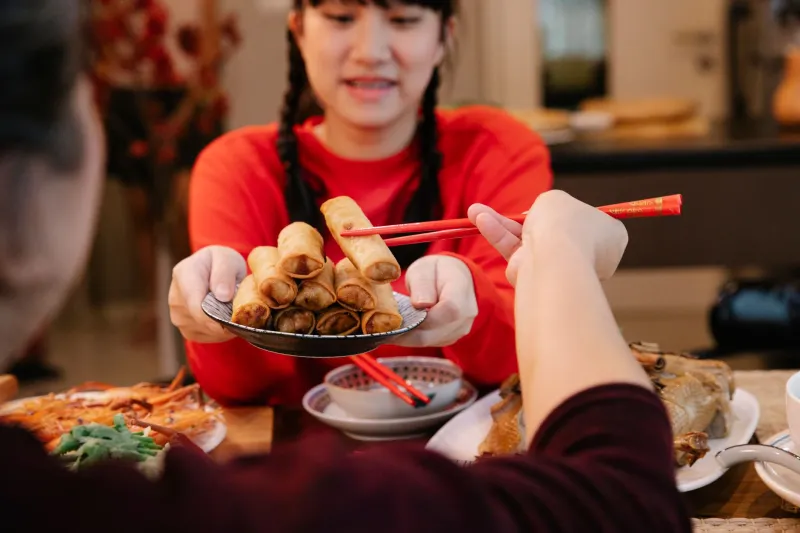
There's a moment at a Shanghai dinner table that doesn't have a great American equivalent. Someone reaches across, gives the lazy Susan a gentle push, and a whole roasted fish glides past three people before landing in front of whoever asked for it. Nobody gets up. Nobody passes anything hand to hand. The conversation doesn't pause. The meal just keeps moving.
That turntable — humble, often scratched, occasionally wobbly — is doing more work than it looks like. It's not a convenience gadget. It's a philosophy made physical.
The Lazy Susan Didn't Start Lazy
Despite the name, the lazy Susan as it appears in Chinese dining culture is anything but passive. In Shanghai and across China, the rotating centerpiece of a round dining table is the organizing principle of the entire meal. Dishes don't belong to individuals. They belong to the table. The lazy Susan makes that literal: every plate is equally accessible to every person seated, regardless of where you're sitting or how far your arms reach.
The irony of the name is almost funny when you understand the context. In American usage, a lazy Susan is often a cabinet organizer, a way to reach the spice rack without moving your feet. In Shanghai, it's the engine of a deeply social ritual. Same object, completely different meaning.
The round table itself matters too. Shanghai family meals — and really most formal Chinese dining — happen at circular tables specifically because there's no head seat. No one is positioned above anyone else. The lazy Susan reinforces that: it rotates toward whoever needs it, not whoever has authority.
What's Actually on That Table
Here's where the contrast with American dining gets sharp. A typical Shanghai home meal doesn't involve each person receiving their own composed plate. Instead, four, six, or eight dishes arrive at the table simultaneously — maybe a whole braised pork belly, a stir-fried green vegetable, a cold appetizer, a tofu dish, a whole fish, and a soup on the side. Everyone takes from everything, in whatever order they want, as many times as they want.
That structure changes what gets cooked. A Shanghai home cook isn't thinking about portion control or individual preferences in the way an American recipe writer might. They're thinking about the table as a whole — balance of flavors, variety of textures, contrast between rich and light, hot and cool. The meal is a composition, not a collection of individual orders.
When you cook for a lazy Susan, you cook differently. You make more dishes, but smaller quantities of each. You think about color and variety because everything is visible at once. You consider how a fatty braised dish plays against a bright vinegared salad, because they'll be eaten in the same mouthful.
Why American Dinner Culture Struggles With This
American home cooking is, in many ways, designed around the individual plate. Recipes yield a specific number of servings. Proteins are portioned per person. The implicit assumption is that everyone at the table gets the same thing in roughly the same quantity, and that the meal can be controlled and predicted.
There's nothing wrong with that. But it does create some friction when Americans try to host a Chinese-style meal. The instinct is to serve dishes sequentially, or to plate individually, or to worry that there isn't "enough" of any one thing. The abundance logic of Shanghai dining — where the goal is variety, not volume per dish — can feel unfamiliar or even anxiety-inducing.
There's also the pacing question. American dinner parties often have a beginning, middle, and end: appetizer, entrée, dessert. A Shanghai table doesn't work that way. Everything comes at once, or in loose waves, and people eat according to their own rhythm. The meal sprawls. It lingers. The lazy Susan keeps spinning because the conversation keeps going.
How to Bring It Home (Literally)
You don't need a round table or a restaurant-grade turntable to borrow this approach. What you need is a shift in how you think about feeding people.
Start by cooking more dishes in smaller quantities rather than one big centerpiece. Three or four smaller plates — a quick cucumber salad dressed with sesame and vinegar, a simple stir-fry, a braised protein, a vegetable dish — immediately creates the kind of variety that makes a Shanghai meal feel like a Shanghai meal. Each thing doesn't need to be elaborate. The combination is the point.
If you want the actual hardware, lazy Susans are cheap and widely available. A 24-inch turntable on a regular rectangular table works better than you'd expect. Put it in the center, load it up, and watch what happens to the energy at your dinner table. People lean in. They sample things they wouldn't have reached for. They talk about what they're eating because they're all eating the same things.
That last part is underrated. Shared food creates shared conversation. When everyone is eating from the same dishes, the meal becomes a common experience rather than a parallel one. You're not just seated near each other — you're actually eating together.
The Table as a Statement
In Shanghai, the dinner table is understood to be a place of connection, not just sustenance. The lazy Susan is the mechanism that keeps that connection moving — literally rotating so that no one is left out, no one is favored, and the food keeps circulating like the conversation.
American food culture is increasingly interested in communal eating, family-style service, and shared plates. That instinct is pointing in the right direction. But the Shanghai model takes it further: it's not just about putting food in the center of the table. It's about designing the entire meal around the idea that eating is something you do with people, not just near them.
So the next time you're hosting dinner, try letting go of the individual plate. Make more dishes. Put them all out at once. Give the table a spin. See what happens when the meal stops being a performance and starts being a conversation.