Crunch Meets Silk: How Shanghai Cuisine Masters the Art of Textural Contrast (And What American Cooking Gets Flat-Out Wrong)
There's a word in Mandarin — kǒugǎn (口感) — that translates literally as "mouth feel," but that translation doesn't do it justice. In Shanghai cooking, kǒugǎn isn't a footnote. It's not the thing you think about after flavor, after aroma, after presentation. It's baked into the architecture of every dish from the very beginning. It is, in many ways, the whole point.
American food culture has gotten pretty good at chasing flavor. We've embraced umami. We've learned to balance sweet and salty. We've gotten obsessed with heat. But texture? We tend to treat it as a happy accident rather than a deliberate choice. A dish is crispy because it was fried. It's tender because it was braised long enough. The contrast between those two things happening simultaneously in a single bite? That's where most Western cooking still has some catching up to do.
Shanghai cooks figured this out a long time ago.
The Philosophy Behind the Contrast
Walk into any home kitchen in Shanghai — or any of the city's thousands of hole-in-the-wall restaurants — and you'll notice something almost immediately. Nothing on the table is texturally uniform. A bowl of braised pork belly (hong shao rou) sits next to a dish of stir-fried water spinach with garlic. The pork is yielding, almost molten, collapsing under the gentlest pressure. The greens are snappy, slightly resistant, alive with crunch. You eat them together. That's not a coincidence.
The underlying logic is simple but profound: contrast creates dimension. A dish that is entirely soft becomes monotonous after a few bites, no matter how good it tastes. A dish that is entirely crunchy becomes exhausting. But place them in conversation — let silk and snap share the same plate, the same forkful — and suddenly your brain has something to engage with. You stay interested. You keep eating. You want more.
This isn't just intuition. There's real sensory science behind it. Our brains process texture as a form of stimulation, and variety in that stimulation keeps us more engaged with what we're eating. Shanghai cooks didn't need a food science lab to figure this out. They just paid attention to what made people happy at the table.
Dishes That Do It Best
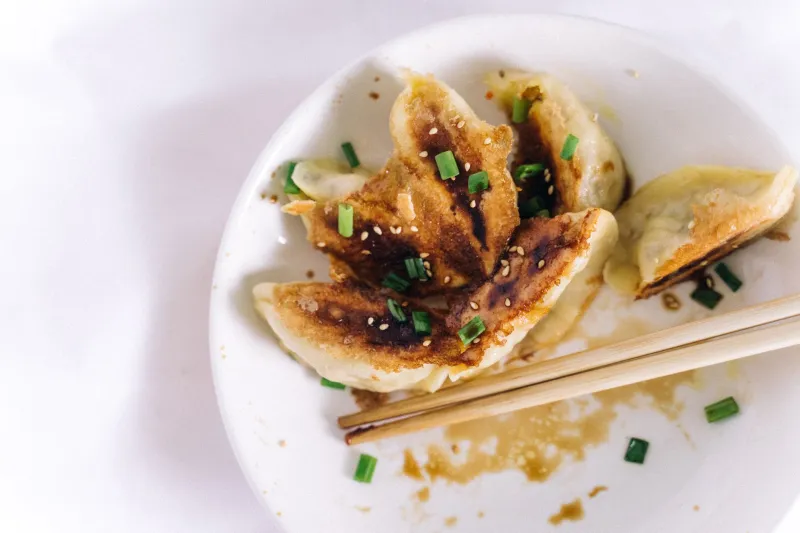
If you want a masterclass in textural layering, start with shengjian mantou — the pan-fried pork buns that are arguably Shanghai's most iconic street food. The bottom of each bun is shatteringly crisp from the cast-iron pan. The top is pillowy and soft, steamed to a gentle give. Inside, there's a juicy pork filling and a small pocket of hot broth. In a single bite, you get crunch, chew, tenderness, and liquid all at once. It's a textural symphony compressed into something you can eat standing on a sidewalk.
Then there's lion's head meatballs (shizi tou), where ground pork is mixed with water chestnuts specifically to introduce little bursts of crunch into an otherwise silky, yielding meatball. The water chestnuts don't dominate. They punctuate. They remind your mouth that something interesting is happening.
Or consider cold sesame noodles, a dish that sounds simple until you notice the deliberate layering: slippery, yielding noodles underneath a rich, creamy sesame sauce, topped with julienned cucumber that snaps back with every bite, finished with crushed peanuts for a dry, granular crunch. Every element is doing textural work. Nothing is there just to fill space.
Even something as humble as mapo tofu — technically a Sichuan dish that has been thoroughly adopted into Shanghai home cooking — follows this logic. Silken tofu, practically quivering, sits against ground pork that's been cooked until it has genuine bite, all of it scattered with crispy fried garlic and scallions. Soft. Chewy. Crisp. In one bowl.
Where American Cooking Loses the Plot
Here's the thing: American cuisine isn't incapable of textural thinking. A great fried chicken sandwich — crispy exterior, juicy interior, soft bun — gets it right. A well-made Caesar salad, with its crunchy croutons against tender romaine, nails it. But these are isolated moments rather than a guiding principle.
More often, American cooking optimizes for one texture and calls it a day. Mashed potatoes are creamy. Roast chicken is meant to be crispy all over. Mac and cheese is uniform richness from edge to edge. These are delicious things. But they're also, texturally speaking, a single note played on repeat.
The bigger issue is that when Americans do think about texture, it's usually as a finishing touch — breadcrumbs on a casserole, croutons on a salad — rather than something built into the dish's DNA. In Shanghai cooking, textural contrast isn't a garnish. It's structural. The water chestnuts in the meatball aren't decorative. The crispy bottom of the shengjian bun isn't a bonus. They're load-bearing elements.
How to Start Layering Texture at Home
The good news is that applying this principle to your own cooking doesn't require a culinary degree or a trip to a specialty market. It requires a shift in how you think about what you're building.
Ask yourself what's missing. If a dish is entirely soft — a braise, a stew, a creamy pasta — consider what element could introduce resistance. Toasted nuts. A handful of fried shallots. A quick-seared vegetable added at the end rather than cooked into submission.
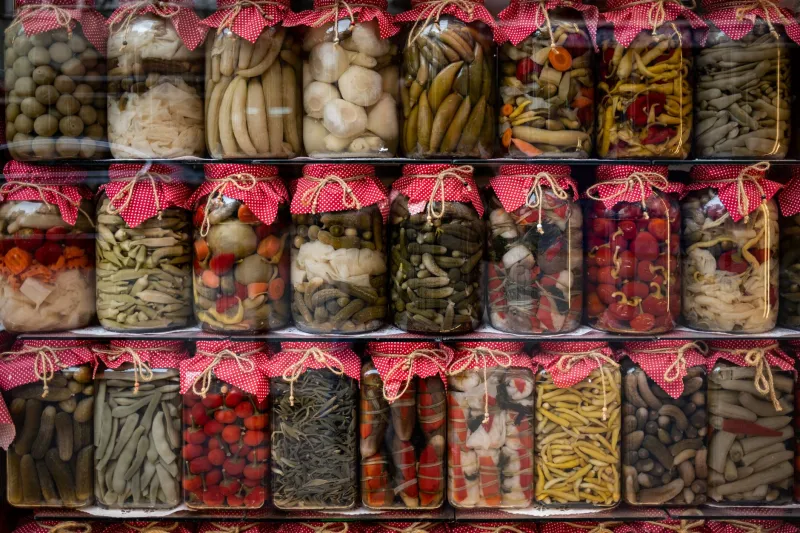
Protect your textures. One of the most common mistakes is letting everything in a dish cook to the same doneness. Add crunchy elements late. Keep them separate until just before serving. A perfectly braised short rib loses nothing from being plated next to a small pile of pickled vegetables with genuine snap.
Think in opposites. Silky sauce over chewy noodles. Tender protein against crisp greens. Creamy filling inside a crunchy shell. These pairings work because they work against each other, and that friction is exactly the point.
Use water chestnuts. Seriously. They're inexpensive, available canned at most grocery stores, and they hold their crunch even through cooking. Dice them into meatballs, stir-fries, or dumplings. Shanghai home cooks have been reaching for them for generations, and the reason is simple: they work.
The Takeaway
Shanghai cuisine has a lot to teach the American kitchen, and most of those lessons are about restraint, patience, and intention. The textural contrast principle is one of the most immediately applicable — and one of the most transformative. You don't need new equipment or exotic ingredients. You need to start thinking of texture not as an afterthought but as a primary ingredient, one that deserves as much attention as salt, heat, and time.
Your food doesn't just need to taste good. It needs to be interesting to eat. Shanghai figured that out centuries ago. The rest of us are just catching up.