The Shanghai Cook's Secret: Every Strange Ingredient Is Just an Opportunity in Disguise
There's a particular kind of dread that hits American home cooks when a recipe calls for something they've never heard of. Doubanjiang. Dried lily buds. Fresh water chestnuts. The instinct is to either abandon the recipe entirely or spend forty-five minutes Googling whether the nearest Whole Foods carries it. Neither option feels great.
Shanghai cooks don't do this. Not because they know every ingredient on earth — they absolutely don't — but because their entire food culture is built on a different operating assumption. The ingredient you don't recognize isn't a problem. It's a starting point.
A City Built on Adaptation
Shanghai's culinary identity is, at its core, a product of collision. For well over a century, the city absorbed waves of migration from across China — Ningbo, Suzhou, Hangzhou, Hunan — and layered those influences on top of each other until something distinctly Shanghainese emerged. Add to that the foreign enclaves of the early twentieth century, the trade routes, and the sheer commercial chaos of being one of Asia's busiest ports, and you get a kitchen culture that learned early on to work with whatever showed up.
That history didn't produce rigidity. It produced flexibility. Shanghai home cooks grew up watching their parents and grandparents taste, adjust, substitute, and improvise as a matter of daily routine — not as a crisis response, but as the normal mode of cooking.
Tasting First, Asking Questions Later
The first thing a Shanghai cook does with an unfamiliar ingredient is taste it raw. Not cook it, not look it up, not ask someone else. Taste it. What's the texture? Is it bitter, starchy, grassy, funky, neutral? Does it have moisture or is it dry? Does it smell like something familiar even if it looks foreign?
This is sensory cataloging, and it's a skill that gets sharper the more you do it. Once you've tasted enough ingredients, you stop needing someone to tell you what to do with them. You start recognizing patterns. Bitter greens behave a certain way under high heat. Starchy roots need longer cooking times. Fermented anything is going to add depth rather than brightness. You're not memorizing rules — you're building intuition.
American cooking culture has largely outsourced this process to recipes and food media, which means a lot of home cooks never develop the muscle. Shanghai cooks have it by default, because their tradition demands it.
The Art of the Honest Substitution
Here's where it gets practical. Shanghai cooks aren't precious about substitution. If a recipe calls for Shaoxing wine and you don't have it, a dry sherry works. If you can't find fresh bamboo shoots, canned ones are fine — just rinse them well and give them a quick blanch. No fresh tofu skin? Dried, soaked overnight, does the job differently but still does the job.
The key distinction is understanding why an ingredient is in a dish before you decide what to swap it with. Is the Shaoxing wine there for sweetness, for depth, or to neutralize fishy odors? Once you know the function, you can find something that serves the same function. A substitution made in ignorance is a guess. A substitution made with understanding is a decision.
This is the part of Shanghai cooking philosophy that translates most directly to American kitchens. You don't need to find exactly the right ingredient every time. You need to understand what that ingredient is doing — and then you have a lot more freedom than you think.
When Unfamiliar Becomes Interesting
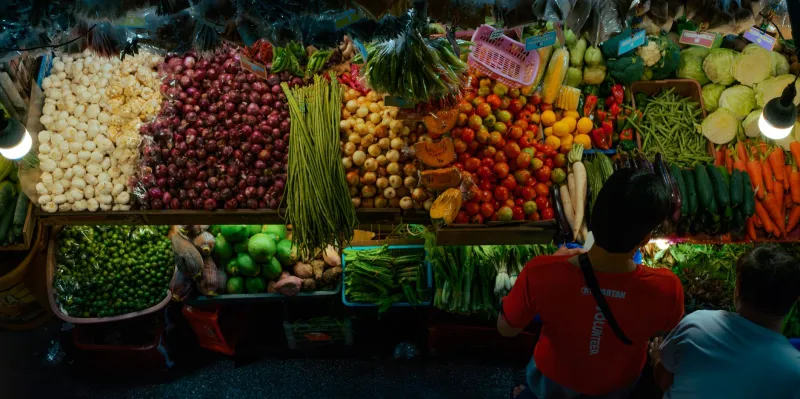
There's also something worth saying about the attitude itself. Shanghai food culture treats novelty as interesting rather than threatening. Walk through any wet market in Shanghai — or, closer to home, any well-stocked Asian grocery in a US city — and you'll encounter things that have no English name on the label, no obvious preparation instructions, and no recipe attached. A Shanghai cook's reaction to this is closer to curiosity than anxiety.
That curiosity is partly cultural and partly practical. Shanghai's markets have always been dense with variety, which means the cooks who shop there had to develop comfort with the unfamiliar. But it's also just a more enjoyable way to cook. Treating every unknown ingredient as a potential discovery rather than a potential mistake changes the entire emotional experience of being in a kitchen.
For American cooks who feel locked into their comfort zone — chicken breasts, pasta, the same five sauces — this is genuinely liberating advice. Go to a Chinese or Korean or Vietnamese grocery store and buy one thing you've never cooked with. Just one. Taste it. Think about what it reminds you of. Then cook it simply and see what happens. Worst case, you learn something. Best case, you've just added a new ingredient to your permanent rotation.
The Recipe Is a Suggestion
Shanghai home cooks hold recipes loosely. This isn't carelessness — it's confidence. When you've cooked enough, you understand that a recipe is a framework, not a law. The ratios matter more than the exact measurements. The technique matters more than the specific ingredient. The flavor balance matters more than whether you used this brand of soy sauce or that one.
This is why Shanghai grandmothers can produce extraordinary food without ever consulting a cookbook. They're not winging it — they're working from a deeply internalized understanding of how flavors and textures interact. The recipe lives in their hands and their palate, not on a page.
American home cooks can build this too, but it requires letting go of the safety net a little. Cook the same dish a few times with small variations. Notice what changes. Pay attention to what your food tastes like at different stages of cooking. Stop treating every deviation from the recipe as a failure and start treating it as data.
Confidence Is a Kitchen Skill
At the end of the day, what Shanghai cooks have that a lot of American home cooks lack isn't a bigger ingredient vocabulary or better technique. It's confidence. The belief that they can figure it out, adapt, and produce something good even when conditions aren't perfect.
That confidence doesn't come from never making mistakes. It comes from making enough mistakes to know that most of them are recoverable. Too salty? Add acid or starch. Too bland? More aromatics, more time, more heat. Overcooked the protein? Shred it and use it differently.
The Shanghai kitchen is not a place of anxiety. It's a place of problem-solving, improvisation, and genuine pleasure in the process. And that, more than any specific dish or technique, is the thing worth importing.