Your Pantry Doesn't Need a Shortcut: How Shanghai Cooks Built Umami Before the Packet Existed
There's a certain kind of food content doing the rounds right now. A chef pinches a little white powder over a bowl of pasta, noodles, or scrambled eggs, takes a bite, and looks directly at the camera like they've just discovered fire. The caption usually says something like: MSG is not the villain they told you it was.
And honestly? That part is true. The decades-long demonization of monosodium glutamate was rooted in racism more than science, and the rehabilitation is long overdue. But here's where it gets interesting — while American food culture is busy discovering MSG as a revelation, Shanghai cooks are sitting at the kitchen table wondering what all the fuss is about. Not because they've been using MSG all along. But because they never needed to.
The umami was already there. It's been there for centuries. And it didn't come from a packet.
What Umami Actually Is (And Why It Matters)
Umami is the fifth taste — that deep, mouth-coating, savory satisfaction that makes you keep eating even when you're already full. The word is Japanese, coined by chemist Kikunae Ikeda in 1908 when he isolated glutamate from kombu seaweed. But the experience of umami is ancient and universal.
Glutamate is an amino acid. It occurs naturally in a staggering range of foods — aged cheeses, cured meats, fermented sauces, dried mushrooms, slow-cooked bones. When glutamate binds to taste receptors on your tongue, your brain registers something it interprets as richness, depth, and satisfaction. MSG is simply the purified, crystallized sodium salt of that same compound. Chemically, it's identical to the glutamate your body already processes from food.
So the question isn't whether glutamate is good or bad. It's how you're getting it onto the plate.
The Shanghai Pantry as a Glutamate Delivery System
Walk into a Shanghai home kitchen — or even a modest apartment with a two-burner stove and a cabinet above the sink — and you'll find a lineup of ingredients that reads like a masterclass in natural umami engineering.
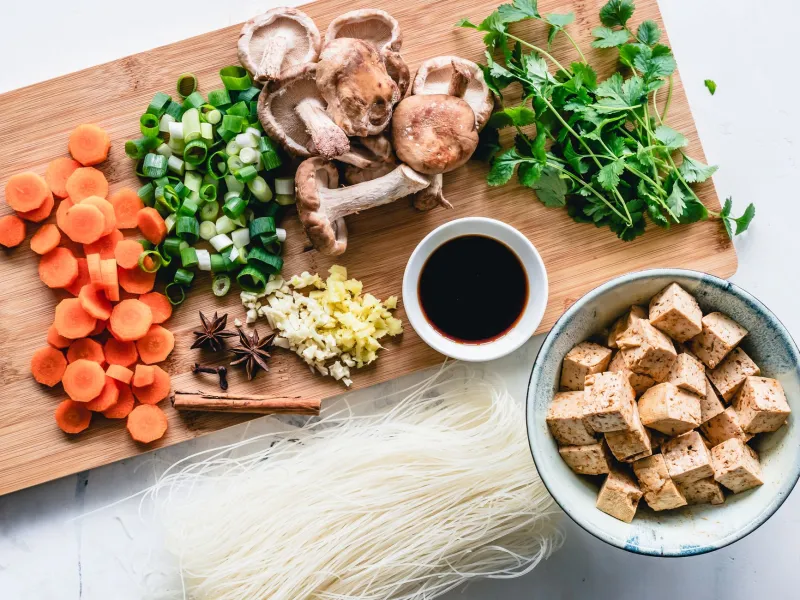
Dried shiitake mushrooms are the anchor. When fresh shiitake are dehydrated, their glutamate content concentrates dramatically. The soaking liquid left behind after rehydration is liquid gold — dark, earthy, intensely savory. Shanghai cooks don't pour it down the drain. They add it to braises, stocks, and stir-fries. That liquid alone can transform a dish.
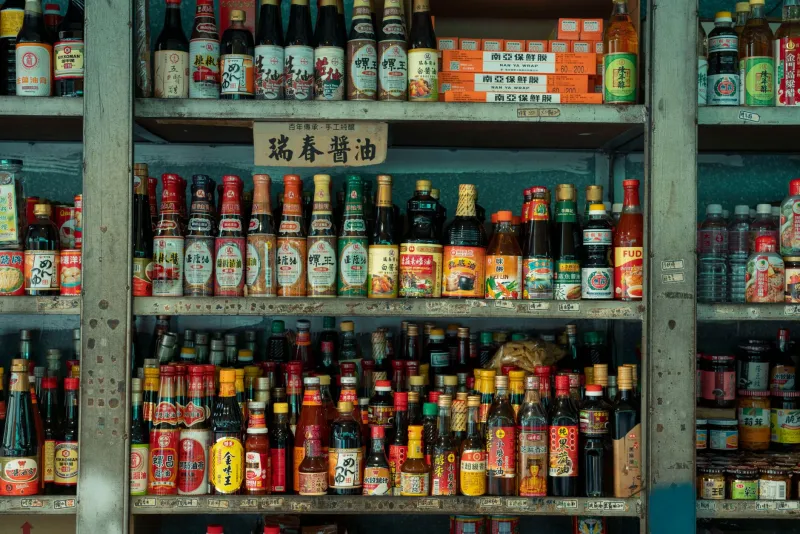
Aged soy sauce — particularly dark soy — carries a complexity that its younger, lighter counterparts don't. Fermentation over months or years produces free glutamates that stack on top of each other. This is why a splash of dark soy in a red-braised pork belly (hong shao rou) hits differently than anything you'd get from a bottle that's been sitting on a supermarket shelf for two weeks.
Doubanjiang, the fermented broad bean and chili paste, is another layered source. Fermentation breaks down proteins into amino acids, and glutamate is right at the front of that lineup. A tablespoon of good doubanjiang isn't just adding heat — it's adding weeks or months of microbial flavor-building work.
And then there's stock. Not the kind from a carton, but the kind that's been coaxed out of pork bones, chicken carcasses, and sometimes both, over several hours. Collagen breaks down into gelatin, proteins release their amino acids, and the result is a liquid with more natural glutamate per cup than most people realize.
Why the Shortcut Exists — And What It's Missing
None of this is meant to shame MSG. In commercial kitchens, in convenience foods, in home cooking where time is genuinely tight — it does a real job. But the reason Shanghai cooking doesn't lean on it isn't some kind of culinary snobbery. It's more structural than that.
When you build umami through dried mushrooms, fermented pastes, and long-simmered stock, you're not just adding glutamate. You're adding layered complexity. Dried shiitake brings earthiness. Dark soy brings caramel depth. Stock brings body and mouthfeel from gelatin. Doubanjiang brings fermented funk and heat. These things work in concert. They create what chefs sometimes call a flavor architecture — a dish that tastes different at the front of your mouth than it does at the back, that evolves as you chew.
MSG, by contrast, is a single note. A loud, satisfying note — but still just one. Adding it to a dish that was already built on shortcuts doesn't create depth. It creates the impression of depth, briefly, before it fades.
That's the umami trap: mistaking the shortcut for the destination.
How to Start Cooking the Shanghai Way
You don't need to overhaul your kitchen. You need to stock a smarter pantry.
Start with dried shiitake. They're cheap, shelf-stable, and available in most Asian grocery stores. Rehydrate them in warm water for 20–30 minutes. Save the soaking liquid. Add both the mushrooms and the liquid to your next braise or noodle soup and notice what happens.
Buy two kinds of soy sauce. Light soy for seasoning. Dark soy for depth and color. They are not interchangeable, and using them together — in the right proportions — is one of the foundational moves of Shanghai cooking.
Make stock on a Sunday. Even a basic pork bone broth, simmered for two to three hours with a few slices of ginger and a knot of scallion, gives you a foundation that transforms everything it touches. Freeze it in ice cube trays. Use it instead of water whenever a recipe calls for liquid.
Get comfortable with fermented pastes. Doubanjiang is the obvious one. But also explore fermented black bean paste, shrimp paste if you're feeling adventurous, and a good aged miso (yes, the Japanese version works on the same principles). These aren't exotic — they're tools.
The Bigger Idea
American food culture is in a fascinating moment right now. There's genuine curiosity about ingredients, techniques, and flavor systems that were dismissed or misunderstood for decades. The MSG rehabilitation is part of that. So is the rise of fermentation, the renewed interest in bone broth, the obsession with umami as a concept.
But Shanghai cuisine offers something more useful than a trend: a philosophy. The idea that satisfying, deeply savory food is built slowly, from ingredients that have already done most of the work for you through fermentation, drying, and time. The idea that flavor is a structure, not a seasoning.
You don't need to add umami to your cooking. You need to start choosing ingredients that bring it with them.
That's what Shanghai home cooks figured out a long time ago. And it's a lesson that tastes a lot better than anything that comes in a packet.