The Cookware Confession: What to Do With All Those Pans You Never Use Anymore
The Shelf of Good Intentions
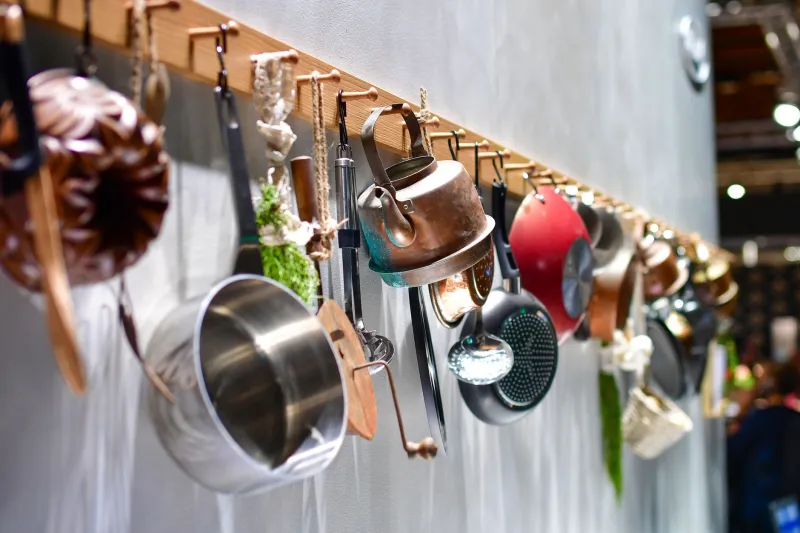
Most serious home cooks have one. A shelf, a cabinet, maybe a hanging rack above the island, populated by cookware that represents aspirations more than actual cooking. The copper sauté pan that looked incredible in the Williams Sonoma display. The stainless steel saucier you bought after watching a cooking competition. The enameled Dutch oven in a color that no longer matches your kitchen.
They're beautiful. They're expensive. And if you've spent any real time cooking Shanghai-style food—especially once a carbon steel wok entered your life—they've probably been gathering dust for longer than you'd like to admit.
This isn't a failure. It's actually a sign that something clicked.
Why the Wok Wins (Without Even Trying)
Shanghai cooking philosophy doesn't set out to make other cookware obsolete. It just happens, because the wok is so fundamentally well-designed for the way the cuisine works that everything else starts to feel like a workaround.
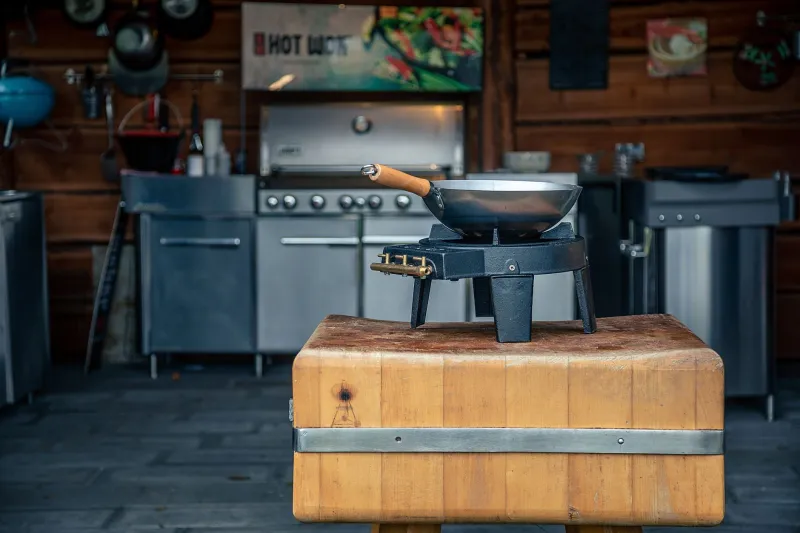
A carbon steel wok heats fast and unevenly in the best possible way—screaming hot at the center, cooler toward the edges—which is exactly what you need to stir-fry, sear, steam, braise, deep-fry, and smoke. It's light enough to maneuver. It develops a seasoned surface over time that gets better with every use. And it's cheap enough that you don't treat it like a museum piece.
The copper pan, by contrast, is gorgeous and thermally responsive, but it requires constant attention, careful maintenance, and a cooking style that values precision over intensity. It's a Western kitchen tool built for Western cooking logic: controlled heat, individual portions, sauces finished with butter. None of that is what Shanghai cooking is doing.
Once you've felt the difference between pushing ingredients around a screaming-hot wok and trying to replicate that energy in a sauté pan, the sauté pan stops making sense for most of what you cook.
The Honest Assessment: What Can Stay
Before you start listing everything on Marketplace, let's be clear: some Western cookware still earns its place, even in a Shanghai-influenced kitchen.
The Dutch oven. This one survives. Shanghai braises—red-braised pork belly (hongshao rou), soy-braised chicken, slow-cooked tofu—work perfectly in a heavy Dutch oven when you're cooking on a Western stovetop without a dedicated braising vessel. The even heat retention is actually an advantage here. Keep it. Use it.
A small saucepan. Blanching vegetables, making a quick sauce, reheating broth—a simple 2-quart saucepan is useful in any kitchen. Nothing fancy required. The $15 stainless steel one from the restaurant supply store does this job as well as anything.
Sheet pans. Not glamorous, but genuinely useful. Roasting vegetables in the oven to serve alongside a wok-cooked protein is a perfectly reasonable approach, especially in an American kitchen where the stovetop setup doesn't always allow for the same high-heat intensity as a Chinese commercial burner.
The Honest Assessment: What Should Go
This is the harder conversation.
The nonstick skillet collection. If you've got a well-seasoned wok, you don't need nonstick. The seasoned surface handles eggs, fish, and delicate proteins without sticking, and it doesn't come with the anxiety of scratching a coating you paid $80 for. Donate the nonstick. Free up the cabinet space.
The copper everything. Unless you're cooking French food regularly and genuinely love the maintenance ritual, copper cookware in a Shanghai-focused kitchen is mostly decorative. If it makes you happy to look at, keep one piece and hang it on the wall. Otherwise, copper holds its resale value reasonably well. Move it on.
The multi-piece stainless steel set. These are sold as a complete solution, and they are—for a different kind of cooking. If your cooking has shifted toward wok-based methods, you're probably only using one or two pieces from the set anyway. Keep what's actually useful. The rest is clutter.
The Guilt Is the Real Problem
Here's the thing nobody says out loud: the reason those pans are still on the shelf isn't that you're waiting to use them. It's that getting rid of expensive cookware feels like admitting a mistake, and admitting a mistake feels bad.
Shanghai cooking culture actually has something useful to say about this. There's a pragmatism baked into the way Shanghai home cooks approach their kitchens—a lack of sentimentality about equipment, a focus on what works rather than what cost the most. A Shanghai grandmother doesn't keep a tool because she paid a lot for it. She keeps it because it earns its place every time she cooks.
That's the standard. Does it earn its place? If the answer is no, it goes.
What to Do Right Now
Pull everything out of your cabinets and put it on the counter. All of it. Then ask three questions about each piece:
- Did I use this in the last three months?
- Does it do something my wok genuinely can't do?
- Would I buy it again today?
If the answer to all three is no, you have your answer.
Donate what's still in good shape. Sell what has real resale value. Recycle what's too worn to pass on. And then stand in front of a cabinet that finally has room in it—room for the wok to hang properly, room for the Dutch oven to be accessible, room for the kitchen to feel like it actually reflects how you cook now.
The expensive mistake isn't keeping the wrong pans. The expensive mistake is keeping them out of guilt and letting them block the path to cooking better.
Your wok doesn't care what used to hang next to it. It just wants to get hot.