Move Over, Avocado Toast: Shanghai's Crispy Soup Dumplings Are Coming for Brunch
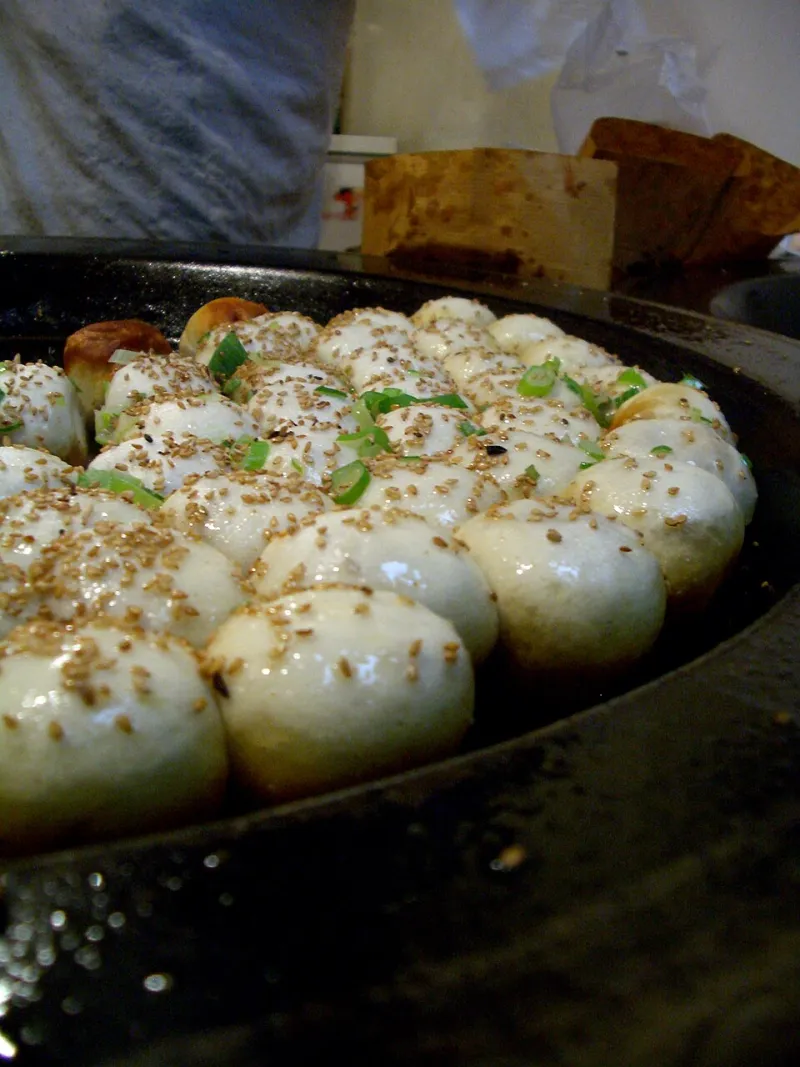
Photo: MR+G from Dalian, CC BY 2.0, via Wikimedia Commons
There's a moment in every Shanghai morning that Americans spend ninety minutes and forty dollars trying to recreate on Sundays.
It happens at a sheng jian bao stall around 7 a.m. The buns hit the flat griddle in rows, sizzle in oil, then get doused with water and covered. Ten minutes later, the lid comes off and steam rolls out like a special effect. Each bun has a golden, crackly bottom, a pillowy steamed top, and a filling so juicy you need to bite a hole in it first or risk spraying your neighbor.
That's the whole pitch. No reservation. No bottomless mimosa upcharge. Just a paper tray and a spoonful of black vinegar.
What Exactly Is a Sheng Jian Bao?
The name translates to "raw-fried bun," which sounds alarming but just means the dough goes into the pan raw, unlike baozi, which is steamed from the start. Inside is a pork filling mixed with aspic — solidified gelatinous broth that melts when heated, turning the interior into soup. It's the same trick that made soup dumplings (xiao long bao) famous, but with a texture contrast the XLB can't touch: shatteringly crisp on the bottom, cloud-soft everywhere else.
If xiao long bao is the delicate, sit-down cousin, sheng jian bao is the one in sneakers eating standing up. In Shanghai, it's breakfast. Full stop. Places like the legendary Yang's Fry-Dumpling (Xiao Yang Sheng Jian) built empires on lines that wrap around the block before most of us have found our keys.
The Brunch Comparison Isn't Even Fair
American brunch is a ritual, not a meal. We love it, sure — but let's be honest about the experience: a 75-minute wait, a $22 egg situation, and a plate that's lukewarm by the time you sit down.
Shanghai's breakfast culture runs on the opposite logic. It's fast, cheap, and eaten at peak freshness, often within arm's reach of the griddle. The stall doesn't take your name; you just get in line, and the line moves. Total cost for a filling breakfast: a couple of dollars.
We're not saying cancel your brunch group chat. We're saying the weekend deserves a crispy-bottomed upgrade that takes the best part of brunch — something indulgent, communal, worth gathering for — and strips out the wait and the tab.
How to Get Them Stateside
Option one: hunt them down. Sheng jian bao has been quietly spreading through US Chinatowns and pan-Asian food halls. Look for "pan-fried pork buns" or "sheng jian bao" on menus in Flushing, the San Gabriel Valley, Richmond's Alexandra Road corridor, or Houston's Chinatown. If a menu lists them, order them first. If the bottoms aren't audibly crisp, complain quietly to yourself and come back.
Option two: make them. It's more approachable than it sounds. The dough is just flour, water, yeast, and a pinch of sugar — softer than a typical bread dough, no long ferment. The filling is ground pork, ginger, scallions, soy sauce, Shaoxing wine, and a splash of stock whipped into the meat to keep it juicy. Purists add aspic; weeknight realists add gelatin powder to warm stock and chill it. Either works.
The technique is the part worth learning:
- Arrange the buns in an oiled nonstick or well-seasoned carbon steel pan, flat-side down.
- Fry for two to three minutes until the bottoms are golden.
- Pour in water to reach about a third of the way up the buns, cover, and let them steam for eight to ten minutes.
- Remove the lid, let the water cook off, add a thin drizzle of oil, and fry another minute or two until the bottoms re-crisp.
- Finish with scallions and sesame seeds. Eat immediately, with black vinegar and a warning to your dining companions: bite a vent hole first.
Make It a Weekend Thing
The move is to treat sheng jian bao like a brunch build: a big cast-iron pan in the middle of the table, a vinegar dish, some chili crisp for the rebels, and a pot of jasmine tea. Double the batch — the second round disappears faster than the first, every single time.
American brunch had a good run. But it's hard to compete with a bun that's simultaneously crunchy, fluffy, and full of soup. Shanghai figured that out generations ago. Your Sunday is just catching up.