Day-Old Rice, Zero Apologies: The Shanghai Way to Fry Rice Like You Mean It
Ask an American home cook what they make when the fridge is looking grim, and fried rice comes up almost every time. Leftover chicken? Throw it in. That half-eaten bag of frozen peas? Sure. A sad bell pepper from Tuesday? Why not. The result is usually fine. Sometimes it's pretty good. But it's almost never intentional — and that's exactly the gap between how Americans treat fried rice and how Shanghai cooks have always approached it.
In Shanghai, nobody apologizes for fried rice. Nobody calls it a "use-up" dish or a lazy Tuesday dinner. It's cooked with the same focus and respect as anything else coming out of a serious kitchen. The difference isn't just technique, though technique matters enormously. It's a philosophical shift — from reactive cooking to purposeful cooking — and once you understand it, you'll never look at a container of leftover rice the same way again.
Why Fresh Rice Is the Enemy
Let's start with the foundation, because this is where most American cooks go wrong before they even turn on the stove. Fresh rice is a disaster for frying. It's too moist, too clumped, and too soft to survive the heat of a wok without turning into a gluey mess. You need rice that has been cooked and then left to dry out — ideally overnight in the refrigerator, uncovered for at least part of that time.
What happens during that rest period is more than just moisture loss. The starches in the rice undergo a process called retrogradation, essentially firming up the individual grains so they hold their shape under intense heat. Shanghai cooks know this intuitively, even if they've never used the word retrogradation in their lives. They cook rice the night before on purpose. The fried rice isn't a happy accident — it's the planned destination.
If you're working with freshly cooked rice and can't wait, spread it on a sheet pan and blast it with a fan or leave it uncovered in the fridge for a couple of hours. It won't be as good as overnight, but it's closer to the right texture than rice straight from the pot.
The Wok Has to Be Serious About This
Temperature is where most home cooks lose the plot. A nonstick pan on a medium burner is not going to give you Shanghai fried rice. It's going to give you steamed rice with eggs in it, which is a different and lesser thing.
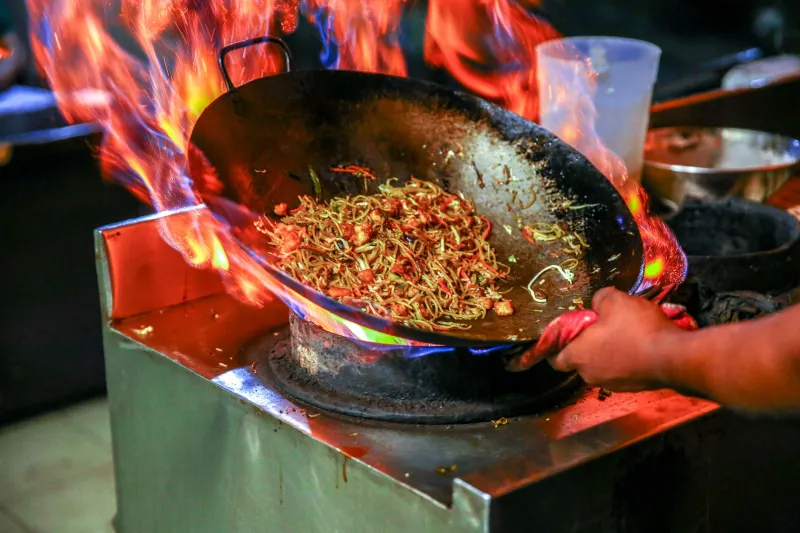
Shanghai fried rice demands a carbon steel wok over the highest heat your stove can produce. The wok needs to be so hot that a drop of water evaporates in under a second. You're not sautéing here — you're creating a brief, violent burst of heat that sears the outside of each grain, giving it that characteristic slightly smoky, slightly crispy quality that makes great fried rice so compulsively edible.
This is the foundation of wok hei — that elusive breath-of-the-wok flavor that you can't fake with low heat or the wrong pan. It's not magic. It's physics. High heat, dry pan, dry rice, fast movement. The moment you crowd the wok or drop the temperature, you're steaming instead of frying, and the dish loses everything that makes it worth eating.
Ingredient Hierarchy: Not Everything Goes In at the Same Time
Here's where Shanghai fried rice reveals its sophistication. It's not a free-for-all. There's an order of operations, and it matters.
Shanghai cooks think about ingredients in terms of what they need from the heat. Aromatics — garlic, ginger, scallion whites — go in first, into the hot oil, for just long enough to bloom without burning. Proteins come next if you're using them, cooked mostly through before the rice arrives. Eggs are a point of contention: some cooks scramble them separately and fold them in at the end; others push the rice to the side, scramble the eggs directly in the wok, and then combine everything quickly so the egg coats each grain in a thin, custardy layer. That second method is the Shanghai approach, and it's worth practicing.
The rice itself goes in after the aromatics and protein, spread across the wok in a single layer and left alone for thirty seconds before you start moving it. That brief undisturbed contact with the hot wok surface is what builds the subtle crust on the bottom of the grains. Don't rush it. Don't stir it immediately. Let the heat do its job.
Seasoning — soy sauce, a touch of sesame oil, white pepper — comes in at the very end, added around the edges of the wok so it hits the hot metal before it hits the rice. This caramelizes the soy sauce slightly and keeps the rice from going soggy.
What Actually Goes In (And What Doesn't)
Shanghai-style fried rice is restrained by design. The classic version — egg fried rice with scallions and a whisper of soy — is considered a benchmark dish precisely because there's nowhere to hide. No amount of random vegetables can cover for bad technique or inferior rice.
When Shanghai cooks do add ingredients beyond the basics, they're chosen deliberately. Lap cheong (Chinese sausage) brings sweetness and fat. Salted fish adds a deep, funky umami hit that transforms the whole dish. Shrimp, if used, are added for flavor and texture, not as an excuse to empty the freezer drawer.
The point isn't austerity for its own sake. It's that every ingredient in the wok should be earning its place, contributing something specific to the dish rather than just showing up because it was available. That's a different relationship with cooking than the one most Americans have with fried rice — and it's a much more satisfying one.
Make It on Purpose Tonight
Cook a pot of rice this evening. Leave it in the fridge overnight, uncovered. Tomorrow, make fried rice — not because you have to, but because you want to see what the dish actually is when it's treated with the attention it deserves.
Get the wok screaming hot. Use day-old rice. Season at the end. Keep the ingredient list short. And stop apologizing for it, because Shanghai cooks never did.