The 20-Minute Shanghai Morning: Breakfast That Beats Brunch at Its Own Game

Photo: Shanghai breakfast congee soy milk scallion pancake table, via i.pinimg.com
Most American breakfasts are built around speed or spectacle. A bowl of cereal, a drive-thru sandwich, or a weekend brunch spread with a waitlist and a mimosa. Shanghai mornings operate on a different rhythm. They are quick, savory, and deeply practical, and they ask for almost none of the ceremony Americans have attached to brunch.
That is the case for stealing a Shanghai breakfast routine. Not because brunch is bad, but because breakfast is the more useful meal. It happens on ordinary Tuesdays. It costs less than a restaurant omelet. And it gives you a reason to keep good pickles, scallions, and rice in the kitchen.
Start With the Bowl: Congee on a Weekday Clock
Congee, or rice porridge, sounds like a project. It does not have to be. The Shanghai home-cook shortcut is cooked rice. Keep a batch of plain rice in the fridge, then simmer one cup of cooked rice with three cups of water or unsalted broth for about fifteen minutes. Stir occasionally, add salt at the end, and let the texture stay a little looser than oatmeal.
Toppings are where the bowl becomes a meal. Scallions, soy sauce, a few drops of sesame oil, pickled mustard greens, shredded pork, a jammy boiled egg, or leftover greens all work. Century egg and pork floss are traditional and worth trying if you spot them, but they are not required for a beginner. The point is a warm, savory bowl that comes together while the kettle boils.
Make-ahead move: cook a large batch of rice on Sunday, portion it, and freeze it in small bags. Reheat one portion with water in a small pot. Breakfast is suddenly a fifteen-minute affair.
Soy Milk, but Make It Savory
Sweet soy milk is familiar to many Americans. Shanghai savory soy milk, often called xian doujiang, is the more interesting cousin. It is warm, gently tart, and loaded with scallions, dried shrimp, pickled vegetables, chili oil, and sometimes fried dough. The result tastes like a savory soup that happens to be made from soy milk.
A beginner version is easy. Heat unsweetened soy milk, add a splash of rice vinegar, a little soy sauce, chili oil, scallions, and a pinch of salt. Crush a few saltine crackers or a piece of fried dough on top for crunch. It will not be identical to a Shanghai shop, but it captures the idea: soy milk as a savory breakfast base, not a sweet beverage.
If the vinegar curdles the soy milk slightly, that is normal. Stir and keep going. The texture is part of the appeal.
Scallion Pancakes Are the Freezer Strategy
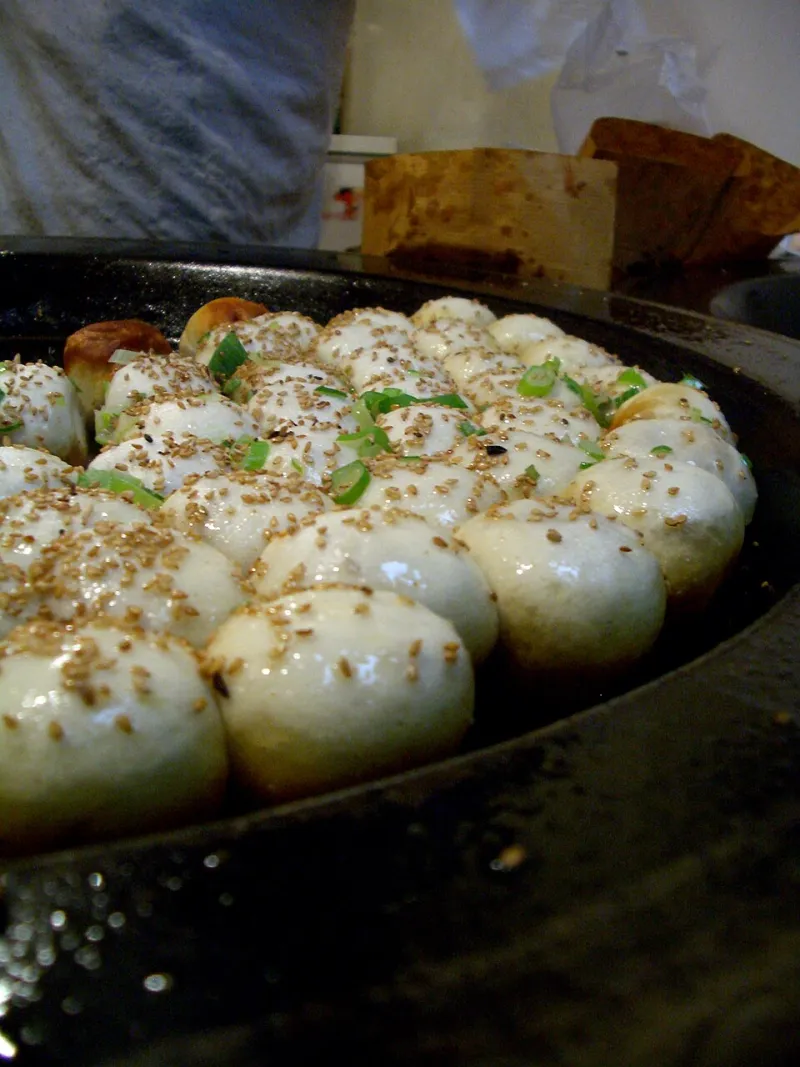
Scallion pancakes are the closest thing Shanghai breakfast has to a drive-thru item. They are crisp, flaky, and savory, and they can be eaten on the move. American cooks do not need to laminate dough before sunrise. Frozen scallion pancakes from an Asian grocery store are a legitimate shortcut. Crisp one in a skillet with a little oil, then wrap it around a fried egg or eat it plain.
If you want to make them from scratch, do it on a weekend and freeze the rounds between sheets of parchment. On a weekday, cook one from frozen in a covered skillet. That is the entire strategy.
The 20-Minute Assembly Line
Here is a realistic weekday timeline. Put the kettle on. Reheat a portion of cooked rice with water in a small pot. While it simmers, heat a skillet and crisp one frozen scallion pancake. Warm soy milk in a mug, then season it with vinegar, soy sauce, chili oil, and scallions. By the time the congee is ready, the pancake is crisp and the soy milk is hot. Breakfast lands in about twenty minutes with one pot and one pan.
Make it even faster by prepping toppings in advance. Wash and chop scallions on Sunday. Keep a jar of chili oil on the counter. Boil eggs in a batch. Breakfast becomes assembly, not cooking from zero.
Grocery Substitutions for American Kitchens
You do not need a specialty market to start. Unsweetened soy milk is in most supermarkets. Rice vinegar can stand in for Chinese black vinegar in a pinch, though black vinegar has more depth. Sauerkraut, rinsed and chopped, can approximate pickled mustard greens. Dill pickle works as a crunchy, tart topping. Frozen scallion pancakes are increasingly common in the freezer aisle of Asian groceries and some mainstream stores.
The one upgrade worth making is rice. A short-grain or medium-grain rice such as Calrose will give you a softer congee than long-grain rice. Long-grain works, but the bowl will be less silky.
Why Breakfast, Not Brunch
Brunch is a performance. It is lovely on a Sunday, but it is not a habit that changes how you eat. A Shanghai-style breakfast is a rhythm. It is savory, inexpensive, and flexible enough to use leftovers. It also proves something American eaters often miss: Chinese cooking is not only a dinner story. Some of its smartest, most comforting food happens before nine in the morning.
Steal the menu, not the ceremony. A warm bowl, a crisp pancake, and a savory mug of soy milk are a better argument than any brunch reservation.